Field notesMay 2023 · traveled first-hand by rail (in from Bruges by Thalys, 3 days / 2 nights)
Prices & rules last checkedJuly 2026
Amsterdam works perfectly well as “just walk the canals” — but the city’s real strength is that a two-hour radius around it is stacked with first-class day trips. Van Gogh’s masterpieces, the car-free water village of Giethoorn, the windmills of Zaanse Schans, and Utrecht, birthplace of Miffy — here is an itinerary that refuses to choose between art and waterways.
The short version — booking is nine-tenths; the waterways do the rest
- The Van Gogh Museum is advance-booking only: there is no ticket window. The moment your dates are fixed, locking in a timed-entry ticket is this itinerary’s single most important task
- Give Giethoorn a full day: it’s 2–2.5 hours each way, but the hours spent steering your own electric boat down the village canals will be the highlight of your time in the Netherlands
- Zaanse Schans stays free through 2026: the planned €17.50 day ticket has been postponed, with paid entry now targeted for spring 2027 at the earliest. Check the official site for the latest arrangements before you visit
- Catch Utrecht as a stopover: about 25 minutes from Amsterdam. Fold it into the morning of the day you move on to your next city and nothing is wasted
Van Gogh Museum — where Van Gogh met the Japanese print

Home to the world’s largest Van Gogh collection (around 200 oils), the Van Gogh Museum charges about €25 for adults (dynamic pricing), free for ages 0–17, and is advance-booking only (as of July 2026, special exhibitions included). Alongside Sunflowers and Almond Blossom, seek out Courtesan (after Eisen) — his oil copy of a Japanese woodblock print. Van Gogh was a fervent admirer of Japan who collected Japanese prints by the hundreds, and the museum lets you trace, room by room, how that obsession flowed into the color of his late years. Tickets go on sale six months ahead and weekend slots sell out early. Book through the official site or via GetYourGuide below, which allows cancellation up to 24 hours before entry.
GetYourGuide
Secure timed-entry Van Gogh Museum tickets
Advance booking is mandatory, so lock in your slot early. GetYourGuide is an official sales partner; many plans cancel free up to 24 hours before entry, and canal-cruise combo tickets are available.
Check availability →The museums cluster on Museumplein, with the Rijksmuseum — home of The Night Watch — right next door. The city itself rolls by pleasantly on foot and by tram: the Singel flower market, Dam Square, the canalsides of the Jordaan. And the free ferries behind Centraal Station across to the Noord district (24 hours, every few minutes) are a small institution of their own — a window on the canal city’s daily life.
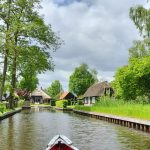
Giethoorn — pilot your own boat through the car-free water village

Nicknamed the “Venice of the Netherlands,” Giethoorn has no roads through its old heart: thatched-roof houses connect by canal and little bridges alone. Getting there: rail to Steenwijk station, about 1 hour 40 minutes (only the stopping services call there), then bus 70 for about 15 minutes to the Ds. Hylkemaweg stop (as of July 2026). The bus runs once an hour, so check connections ahead on 9292.nl. Service is reduced on weekends and holidays.

On arrival, head straight for an electric boat rental (figure €15–30 per hour; no license needed under 12 m). The controls are a wheel and a throttle — you’ll have the hang of it in minutes. Slow down in the narrow village channels and give way to oncoming boats; hold to that, and you get one or two hours you can have nowhere else, gliding within arm’s reach of the front gardens of thatched houses. The open lake (Bovenwijde) turns windy, so a route built around the village canals is the better pick. And once you hand the boat back, walk the canalside paths and see the same views again from up on the bridges.
Zaanse Schans — windmill silhouettes and what changes in 2026

The easiest windmill country from Amsterdam is Zaanse Schans — about 17 minutes by train plus a 15-minute walk. Historic windmills and green timber houses stand relocated and preserved along the Zaan river, with cheese and clog workshops among them. Dropping by in the late afternoon on the way back from Giethoorn, we caught the quiet silhouettes of the mills after the tour buses had pulled out. One planned change to watch: as an overtourism measure, a €17.50 day ticket (bundling windmill and museum entry) had been announced — but the plan has been postponed, and entry remains free through 2026, with paid entry now targeted for spring 2027 at the earliest (as of July 2026). Rollout timing and exemptions are still in flux — confirm on the official site just before you go.
Utrecht — two-level canals and Miffy’s hometown, on a stopover

Utrecht, a university city about 25–30 minutes from Amsterdam Centraal, is the older canal town of the two. Its signature is the two-level structure of the Oudegracht, the old canal — medieval unloading cellars at water level, now converted into terrace cafés and restaurants. This is also the hometown of Dick Bruna, creator of Miffy (Nijntje): look for the Miffy traffic lights and the Nijntje Museum dotted around town. Together with the Dom Tower, the tallest in the Netherlands, it all fits in half a day — so the efficient move is to fold it into the morning of a travel day, as we did on our way toward Cologne.
Practical notes for the Netherlands
- How many days — one day for Amsterdam and its museums, one for Giethoorn, and a half to full day for Zaanse Schans plus Utrecht. Three days / two nights is the minimum build
- Transport — trains, buses and trams all take contactless credit-card tap-in (OVpay). Dutch Railways discounts online tickets bought at least 4 days ahead
- Museums assume reservations — the Van Gogh Museum is advance-only, and the Rijksmuseum and Anne Frank House also run on timed entry. Don’t plan on deciding at the door
- Mind the “coffeeshops” — in the Netherlands a “coffeeshop” is a licensed cannabis shop. Remember that some countries’ drug laws apply to their citizens even abroad. For actual coffee, look for “café” or “espresso bar” signs
- Entry paperwork — the EU is in the EES/ETIAS transition period. Check the latest rules before departure
Where to go from here
- The country at a glance → Netherlands Travel Guide
- The stop before this one → Bruges Travel Guide
- Onward into Germany by rail → Cologne and the Rhine Valley Itinerary
- Compare all our destinations → Destinations
The history here
Why the places, the food and the artworks in this article are where they are.
The Dutch East India Company (VOC) is founded
Often called the first joint-stock company. Asian trade paid for the threefold expansion of the canal ring from 1613, which is why the city is shaped like a fan. The houses along the canals are narrow because they were taxed on their frontage.
📍 If you go
Rembrandt finishes The Night Watch
A group portrait of a civic militia company. The men who paid for it are said to have been unsettled at being painted mid-movement rather than lined up. In the Dutch Golden Age the subjects of great paintings were merchants and citizens, not nobles.
📍 If you go
The Frank family moves into the Secret Annex
On July 6 they moved into rooms behind a canal-side business, and two years later were betrayed and taken away. Only Anne’s father Otto survived to publish the diary. The staircase behind the bookcase is still there.
📍 If you go


