This is the history section of Travelers Route. It runs world history as a single timeline, from the first cities to the present, and ties each event to something you can still visit, look at or eat. The milestones on the timeline are chosen for their significance in world history alone, and every event listed here has a real place at the end of it.
Read it as a story
If you would rather start by reading, begin here. Each story follows one thread across several countries in chronological order, and every chapter leads on to the article you would use to stand on that ground yourself.
Events, and what you can still visit
Filter by what survives (cities, buildings, museums, paintings, food, living culture), by a thread that crosses borders, by era, or by country. Every date carries a source link. The thin rows between the cards are milestones of world history, from the first cities to the present — they lead nowhere, but they tell you when each event happened. Where a story exists, the milestone links to it.
Start with the shape of it. Select an era and the table below narrows to it.
66 events
- 🏺 Antiquityto 476
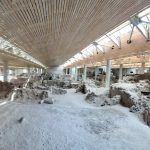
Thera erupts and seals the town of Akrotiri
At the height of Minoan civilization the center of the island blew apart and sank into the sea. The town survived under the ash, but unlike Pompeii not a single body has been found: the residents seem to have escaped. The crescent of cliffs in every photograph of Santorini is the scar of that eruption.
📍 If you go
- The founding of Rome (traditional date) — The story starts on a small hill by the Tiber Read the story → Source
The Delian League puts its treasury on Apollo’s island
After the Persian Wars the common war chest of the Athenian-led alliance was kept on the sacred island of Delos. The island of temples was also a trading hub of the eastern Mediterranean, and under Rome it held a slave market. The uninhabited ruins you reach by boat from Mykonos were once the center of the Aegean.
📍 If you go
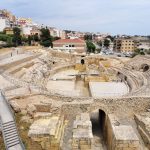
Roman legions land in Iberia and found Tarraco
In the Second Punic War the Scipio brothers landed here to get behind Carthage, and the port became the capital of Roman Hispania. The amphitheatre faces the sea; outside the walls an aqueduct still carries its water channel across a valley. A provincial capital of Rome sits an hour from Barcelona.
📍 If you go
The Colosseum opens
Begun by Vespasian and inaugurated by his son Titus with a hundred days of games. The 50,000-seat arena was quarried for stone from the Middle Ages onward and survived anyway. Next door the Roman Forum had been the center of politics and law since the Republic; together they are the machinery of the empire, still standing.
📍 If you go
Hadrian rebuilds the Pantheon
It remains one of the largest unreinforced concrete domes ever built, open at the top so that rain and light fall through. Converted to a church in 609, it escaped demolition and has not lost its roof in nearly two thousand years. It is one of the few places in Rome where you stand inside an ancient building still as it was.
📍 If you go
- The Maya Classic period begins — A script of their own, an exact calendar, the concept of zero Source
- The fall of the Western Roman Empire — The end of antiquity; the Middle Ages begin Read the story → Source
- 🏰 Middle Ages476–1453
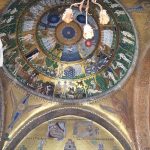
The relics of St Mark arrive in Venice from Alexandria
Merchants carried them out of Muslim-ruled Egypt — stole them, the story goes. A basilica was built to house them, and Mark became the city’s patron saint. The gold mosaics inside are also a self-portrait: a maritime republic that grew rich on trade with the East.
📍 If you go
The Althing, the all-island assembly, first meets at Þingvellir
Settlers gathered once a year to recite the law and settle disputes. It is counted among the oldest surviving parliaments in the world. The meeting place lies in the rift between the North American and Eurasian plates, which are still pulling apart by a few centimeters a year.
📍 If you go
- Polynesian navigators reach Hawaii (dates disputed) — They crossed the Pacific by stars and swells Source
- Gunpowder, the compass and movable type in Song China — All within a century; all later carried west Source
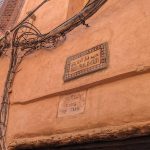
The Almoravids found Marrakesh
It was built as the northern terminus for caravans that had crossed the Sahara. For more than nine centuries since, the medina has been not a preserved ruin but a working maze of trade and daily life; it became a World Heritage Site in 1985. The storytellers and food stalls of Jemaa el-Fnaa are protected as intangible heritage.
📍 If you go
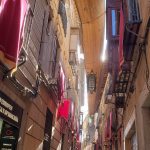
Alfonso VI of Castile takes Toledo
A great Muslim-ruled city passed to Christian rule, but neither the Muslim nor the Jewish population was expelled. A school of translators turned the Greek learning preserved in Arabic into Latin and sent it north into Europe. That is why a cathedral, synagogues and Islamic architecture stand in the same old town.
📍 If you go
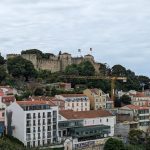
Afonso I retakes Lisbon with a crusader fleet
He persuaded northern European crusaders on their way to the Holy Land (English, Flemish and German) to stop, and took the Moorish castle after a four-month siege. São Jorge Castle on the hill is that castle, and the hilltop castle at Sintra fell the same year. Every wall you now use as a viewpoint changed hands in this one year.
📍 If you go
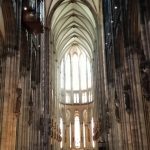
The relics of the Three Kings are moved from Milan to Cologne
After Emperor Frederick I subdued Milan, the archbishop of Cologne brought the relics home. Pilgrims arrived from all over Europe, and the cathedral was commissioned as the vessel to hold them. The golden shrine still stands behind the high altar.
📍 If you go
A beguine community is founded at Bruges
A self-governing quarter for women who lived in community without taking monastic vows. The quiet ring of white houses around a courtyard is the trace of women making a place of their own in a medieval Flemish city; it became a World Heritage Site in 1998.
📍 If you go
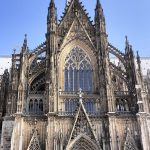
Cologne Cathedral: 632 years from the first stone to the last
Work stopped in the Middle Ages and a crane stood abandoned on the south tower for over three centuries. In the nineteenth century Prussia finished it as a national project, following the medieval drawings. Climbing the 533 steps of the south tower is one way to count those 632 years.
📍 If you go
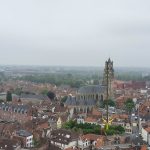
Bruges rebuilds its belfry after a fire
The belfry belonged to the citizens rather than the church: proof of self-government and a strongroom for the town’s charters. Bruges prospered as the trading center of the north in the fifteenth century, then declined when its sea channel silted up. Because it declined, the medieval city stayed as it was.
📍 If you go
King Dinis founds Portugal’s first university
It was born in Lisbon, moved back and forth, and settled in Coimbra in 1537. The Joanina Library is an eighteenth-century baroque book room built with Brazilian gold by João V, with a resident colony of bats that eat the insects that would eat the books.
📍 If you go
Venice moves its glass furnaces to Murano
Officially to prevent fires; in practice to stop the technique from leaking out. Glassmakers were forbidden to leave the island and given privileges in exchange. That decree is the reason Murano glass is an island craft at all.
📍 If you go
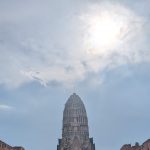
Ayutthaya is founded, and burns four centuries later
The capital on an island between rivers grew rich on east-west trade and was destroyed by the Burmese army in 1767. The Buddha head held in the roots of a fig tree is what centuries of being broken and left alone look like.
📍 If you go
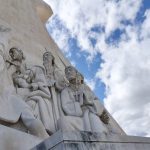
Prince Henry sails for Ceuta
This is the expedition usually taken as the opening of the Age of Discovery, and the fleet was fitted out at Porto. The citizens are said to have given all their meat to the ships and eaten the offal themselves. That is why the people of Porto are still called tripeiros, tripe-eaters, and why tripe stew is the city’s dish.
📍 If you go
- ⛵ Early modern1453–1789
Granada falls, the Jews are expelled, Columbus sails — all in one year
In the year the Reconquista ended, the Catholic Monarchs ordered the expulsion of the Jews. The synagogues of Toledo survived because they were converted into churches, and have since been restored and opened to visitors. The reason they survived is the history of the expulsion itself.
📍 If you go
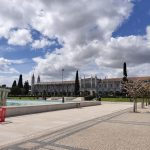
Vasco da Gama opens the sea route to India
He sailed from the beach at Belém in 1497 and reached Calicut in May of the following year. The spice wealth paid for Jerónimos Monastery, where his tomb now lies. Belém Tower was finished about twenty years later to guard the point of departure.
📍 If you go
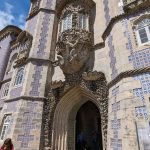
Manuel I brings Seville tiles to the palace at Sintra
Usually taken as the moment Islamic geometric tilework entered Portugal. It evolved into something of its own — azulejos that tell stories in blue and white — and went on to cover churches, stations and house fronts. Look at Moroccan zellij and you are looking at the source.
📍 If you go
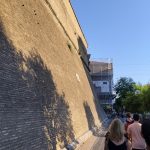
Michelangelo finishes the Sistine Chapel ceiling
He thought of himself as a sculptor, took the job reluctantly, and spent four years on the scaffolding. The Last Judgement came thirty years later, in 1541. Papal conclaves are still held in this room.
📍 If you go
- The first circumnavigation (Magellan’s fleet) — The round earth, proved by sailing it Read the story → Source
Portuguese sailors are wrecked on Tanegashima, and firearms reach Japan
The eastern end of the Age of Discovery route was Japan. Guns arrived first, then Christianity and Portuguese sweets, all by the same sea route. Standing at the Monument to the Discoveries in Belém, you are standing at the other end of it.
📍 If you go
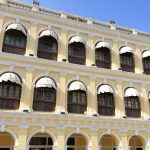
Portugal is allowed to settle at Macau
Ming China permitted a settlement, and it became the hinge of East Asian trade. The Jesuits began St. Paul’s in 1602; a fire in 1835 left only the facade. The wave-patterned pavement of Senado Square is the same design as Lisbon’s.
📍 If you go
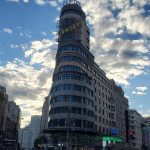
Philip II moves the court to Madrid
Madrid has been the capital ever since the court settled almost exactly in the middle of the peninsula. The present Royal Palace was built after the old Alcázar burned in 1734, and is one of the largest palaces in Europe.
📍 If you go
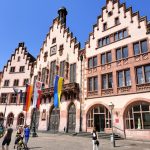
Holy Roman Emperors begin to be crowned at Frankfurt
The Golden Bull of 1356 made the city the site of the imperial election, and from 1562 the coronation was held here too. The Kaisersaal in the Römer holds portraits of fifty-two Holy Roman Emperors.
📍 If you go

Legazpi founds Manila, and 333 years of Spanish rule begin
The walled city of Intramuros became the colonial capital, and galleons ran between here and Mexico. Spanish names on the Filipino table date from this period — lechon is lechón, suckling pig.
📍 If you go
El Greco paints The Burial of the Count of Orgaz
The masterpiece of a Cretan-born painter who settled in Toledo, it still hangs in the church that commissioned it. Because it was never moved to a museum, you can see it where it was made to be seen.
📍 If you go
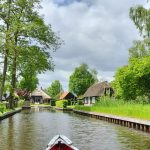
The Dutch East India Company (VOC) is founded
Often called the first joint-stock company. Asian trade paid for the threefold expansion of the canal ring from 1613, which is why the city is shaped like a fan. The houses along the canals are narrow because they were taxed on their frontage.
📍 If you go
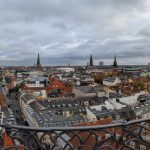
Christian IV’s Round Tower is completed
Built as an observatory, it is climbed by a spiral ramp rather than stairs. Peter the Great of Russia is said to have ridden up it on horseback in 1716. The sea of roofs from the top is the outline of the city Christian IV built.
📍 If you go
Rembrandt finishes The Night Watch
A group portrait of a civic militia company. The men who paid for it are said to have been unsettled at being painted mid-movement rather than lined up. In the Dutch Golden Age the subjects of great paintings were merchants and citizens, not nobles.
📍 If you go
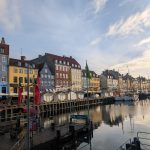
The Nyhavn canal is dug
It was cut so that ships could reach the King’s New Square from the sea, and became a sailors’ drinking street. Hans Christian Andersen lived among those colored houses for years. The most photographed view of Copenhagen is a piece of seventeenth-century harbor engineering.
📍 If you go
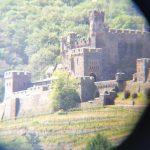
The Nine Years’ War leaves the Rhine castles in ruins
Louis XIV’s army burned castles and towns as it withdrew. In the nineteenth century the ruins were loved as romantic scenery and some were rebuilt as aristocratic residences. The castles you pass on a cruise are a mix of the ruined and the reimagined.
📍 If you go
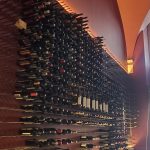
The Methuen Treaty sends port wine to Britain
Britain, at odds with France, cut the duty on Portuguese wine in exchange for admitting British woolens. The wine was fortified with brandy so that it would survive the voyage; that is port. That treaty is why British trading names still line the lodges in Gaia.
📍 If you go
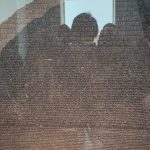
The British Museum is founded
The nation bought the collection of the physician Hans Sloane and opened the world’s first national public museum in 1759. Free entry was a principle from the start.
📍 If you go
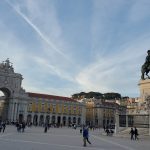
The Lisbon earthquake
On the morning of All Saints’ Day, earthquake, tsunami and fire destroyed most of the city. The Marquis of Pombal laid out a grid of new streets — the Baixa — braced with an anti-seismic timber cage. Azulejos covered the rebuilt facades, and their mass production dates from this period. Voltaire wrote it into Candide.
📍 If you go
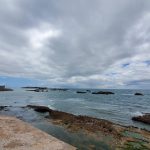
A sultan lays out Essaouira as a port town
On a site the Portuguese had fortified and abandoned in 1506, the sultan had a French engineer design a grid-planned port. Cannon line the European-style ramparts; inside is a maze of white houses. It prospered as Morocco’s Atlantic trading port.
📍 If you go
- The American Declaration of Independence — The start of an age in which colonies made themselves nations Source
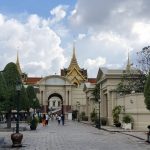
Rama I moves the capital to Bangkok
A new capital built across the river after the loss of Ayutthaya. The Emerald Buddha was installed in Wat Phra Kaew inside the Grand Palace. Wat Arun was the royal temple before the move; the reclining Buddha of Wat Pho dates from Rama III. The three great temples belong to three different reigns.
📍 If you go
- The French Revolution — Ordinary people become the main actors in history; the end of the early modern era Source
- 🚂 Modern1789–1945
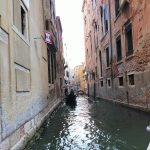
The Republic of Venice surrenders to Napoleon
The end of eleven centuries as a maritime republic. The Doge’s Palace was residence, parliament, court and prison at once, and the Bridge of Sighs runs from the courtroom to the cells. Napoleon took the horses of St Mark’s to Paris; they later came back.
📍 If you go
The Rosetta Stone is found
French soldiers uncovered it during Napoleon’s Egyptian campaign, and it passed to Britain under the terms of the 1801 surrender. The same decree carved in three scripts was the key to reading hieroglyphs. It draws the largest crowd in the British Museum.
📍 If you go
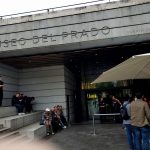
Madrid rises against Napoleon’s army
The rising of May 2 was put down by the executions on the 3rd. Goya painted that night six years later, and the man in the white shirt with his arms open hangs in the Prado. From the square where the rising began to the museum is a fifteen-minute walk.
📍 If you go
The Prado opens
The royal collection was put on public view. Velázquez painted Las Meninas (1656) at court, and it moved here from the palace. That is why three centuries of Spanish royal collecting can be seen in one building.
📍 If you go
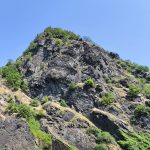
Heine writes “Die Lorelei”
The rock had always marked a dangerous narrows; the maiden who lures sailors to their deaths was invented by Brentano in 1801. Heine’s poem and Silcher’s tune carried it around the world, and made a landmark out of a rock.
📍 If you go
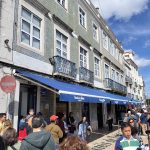
The monastery’s pastry goes on sale in a shop
When the monasteries were dissolved in 1834, a monk left the custard tart recipe with the sugar refinery next door. The shop that opened in 1837 is Pastéis de Belém, still beside the monastery. The monastery is World Heritage; the recipe is in a safe.
📍 If you go
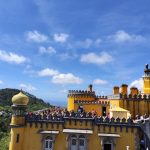
Ferdinand II begins Pena Palace
A German-born prince consort built a Romantic castle on the summit around the shell of a ruined monastery. The yellow and red walls are not the real Middle Ages but the nineteenth century’s dream of them. The Moorish Castle on the same ridge is the real thing.
📍 If you go
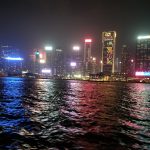
The Treaty of Nanking cedes Hong Kong Island — for 155 years
The island was ceded as a result of the Opium War, beginning a century and a half of British rule. The Star Ferry between Kowloon and Hong Kong Island opened in 1888 and still crosses the same water in ten minutes.
📍 If you go
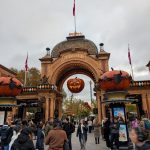
Tivoli Gardens opens
The founder persuaded the king that people who are amusing themselves do not think about politics, and opened the gardens outside the ramparts. It is considered the second-oldest amusement park still operating (the oldest, Bakken, is in the same suburbs). Walt Disney visited, and said he took ideas from it.
📍 If you go
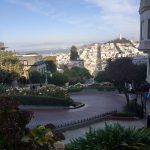
The Gold Rush
A village of about a thousand people became a city of twenty-five thousand within two years of the discovery of gold. Houses went up on slopes too steep for horses, and in 1873 the cable cars began to climb them. The cars still running are evidence of what those hills did to the city.
📍 If you go

The rules of modern football are unified
Club representatives met in a London pub, formed the Football Association, and agreed on a code in which the ball is not handled. The Premier League was created in 1992. What you watch in the stadium is the continuation of those 160 years.
📍 If you go
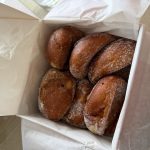
Portuguese migrants arrive in Hawaii from Madeira
They came all the way from an Atlantic island as contract laborers for the sugar plantations, bringing fried malasadas and a small four-stringed instrument that became the ukulele. A hot malasada in Honolulu is a nineteenth-century migrant’s food.
📍 If you go
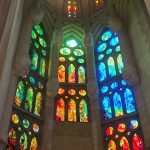
Work begins on the Sagrada Família
Gaudí took over the following year and gave it the rest of his life. It became a World Heritage Site unfinished and is still a building site. Walk the unchanged medieval Gothic Quarter first and you understand how strange this new cathedral must have looked a century ago.
📍 If you go
French Indochina is created
France bound Vietnam and Cambodia into a colonial federation. Saigon Central Post Office was finished in 1891, its iron roof and tiling like those of a Paris railway station. The baguette arrived in this period and, filled with Vietnamese ingredients, became bánh mì.
📍 If you go
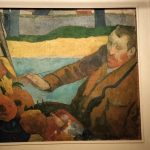
Van Gogh goes to Arles
A little over a year of painting in the south of France produced the Sunflowers series. The one in Amsterdam is a repetition made in 1889. He worked as a painter for only ten years, and the museum walks you through those ten years in order.
📍 If you go
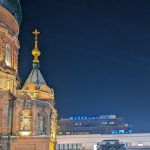
Russia builds the Chinese Eastern Railway, and Harbin is born
The city began as a construction base for the railway, and the cobblestones and European facades of Central Street are what the Russians brought with them. St. Sophia Cathedral was founded in 1907; the present building dates from 1932. From 1932 to 1945 the city lay inside Manchukuo.
📍 If you go
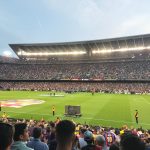
FC Barcelona is founded
The Swiss Joan Gamper advertised in a newspaper for players. When the Catalan language was suppressed under Franco, the club became a vehicle for Catalan identity. The motto “more than a club” comes out of that history.
📍 If you go
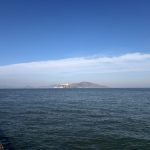
Alcatraz becomes a federal prison
The island in the middle of the bay went from fortress to military prison, and from 1934 held federal inmates including Al Capone. The currents were said to make swimming away impossible; it closed in 1963. It is now a national park you reach by boat.
📍 If you go
Guernica is bombed
On April 26, in the Spanish Civil War, the German air force bombed the Basque town in support of Franco. Picasso painted it for the Paris Exposition that year and left instructions that it not return until democracy did. It came home in 1981.
📍 If you go
The thousand-bomber raid leaves Cologne in ruins
On the night of May 30 the RAF sent a thousand aircraft over the city. The cathedral took fourteen bombs and stayed standing; the photograph of its spires above the rubble became a symbol of the post-war years. Almost everything else you see was rebuilt.
📍 If you go
The Frank family moves into the Secret Annex
On July 6 they moved into rooms behind a canal-side business, and two years later were betrayed and taken away. Only Anne’s father Otto survived to publish the diary. The staircase behind the bookcase is still there.
📍 If you go
- The war ends and the United Nations is founded — Institutions built so that it would not happen again Source
- ✈️ Contemporaryfrom 1945
- The Universal Declaration of Human Rights — The rights of every person, set down for the first time Source
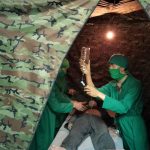
The Tet Offensive
The Lunar New Year truce was broken by simultaneous attacks across South Vietnam. The tunnel network at Cu Chi outside Saigon was a forward base, 250 km of tunnels with kitchens and hospitals inside. The war ended with the fall of Saigon on April 30, 1975.
📍 If you go
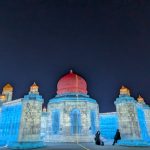
The Harbin International Ice and Snow Festival begins
It grew out of ice lanterns — candles set inside hollowed-out blocks of ice by fishermen on the Songhua River — which became a lantern fair in 1963. The ice city, cut from the river each winter, is built to be melted.
📍 If you go
The Macanese egg tart is invented
The British pharmacist Andrew Stow remade the Portuguese pastel de nata with English custard. Portugal to Macau, then — in an Englishman’s hands — to Hong Kong and across Asia. One pastry summarizes 450 years of rule.
📍 If you go


No events match this combination yet.
How to use this page
- Before you go. Filter by the country you are heading to and read from the top. You arrive already knowing why the thing in front of you is there.
- After you get back. Look up the name of something that caught your eye, then follow its event along a thread. The same story continues in another country.
- Choosing the next trip. Filter by thread and look at what survives in countries you have not been to. The Age of Discovery runs from Lisbon to Macau and on to Japan.
If you want history to decide the destination itself, there is a page for choosing your next trip by history. For planning a trip country by country, start from the destinations index. The cards under each event link to the article you would use to get there.