The words “maritime empire” bring a country to mind, but the first powers to control the sea were not countries. They were cities. Neither Venice nor Bruges held much land; they gathered their wealth in warehouses, in ships and in credit. Companies took the lead next, and states came last of all. This page follows the story of the trading cities and the empires of the sea through places you can still stand in today. The card under each chapter leads to the article for getting there.
In short
- Trade begins with the question of where to put your trust. The treasury of an alliance went to a sacred island that belonged to no city at all.
- Control of the sea passed from cities (Venice, Bruges) to companies (the Dutch East India Company) and at last to states (Britain, and Hong Kong).
- The wealth is still here as glass, as paintings and as wine — and the cities that declined are the ones that kept most of their old shape.
1 A treasury on a neutral island
In 478 BC, after the Persian Wars, the league of cities led by Athens had to decide where to keep its common war chest. The choice was not Athens but Delos, the sacred island where Apollo was said to have been born. They put the treasury where no city owned it — trade and alliance begin, before anything else, as a question of where to put your trust.
The island was at once a sanctuary and a trading hub of the eastern Mediterranean, and by the Roman period it held a slave market as well. That a holy precinct and a marketplace shared a single island is still legible in the layout of the ruins. The uninhabited island you reach by boat from Mykonos was once the center of the Aegean.
2 When cities ruled the sea
In 828 Venetian merchants carried the relics of St Mark out of Alexandria, then under Muslim rule — stole them, the story goes. A basilica was built to house them, and from that point Mark was the city’s patron saint. The city had, in effect, gone out and acquired its own trademark. The interior, covered in gold mosaic, is also a self-portrait of a maritime republic grown rich on trade with the East.
The strength of that republic was not only ships and warehouses. In 1291 it moved every glass furnace in the city out to the island of Murano. The stated reason was fire; the real one was to keep the technique from leaking out. The glassmakers were forbidden to leave the island, and given privileges instead. The idea of shutting a craft up on an island survives in the phrase “Murano glass”.
The north had a trading city with self-government of its own: Bruges. The belfry rebuilt after the great fire of 1280 belonged not to the church but to the townspeople. It was the proof of that self-government, and the strongroom where the city kept its charters. Bruges flourished as the trading center of the north in the fifteenth century, then declined as the inlet to its outer harbor silted up — and it is because it declined that the medieval streets are still there to walk.
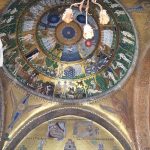
The relics of St Mark arrive in Venice from Alexandria
Merchants carried them out of Muslim-ruled Egypt — stole them, the story goes. A basilica was built to house them, and Mark became the city’s patron saint. The gold mosaics inside are also a self-portrait: a maritime republic that grew rich on trade with the East.
📍 If you go
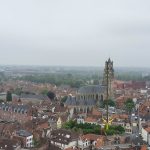
Bruges rebuilds its belfry after a fire
The belfry belonged to the citizens rather than the church: proof of self-government and a strongroom for the town’s charters. Bruges prospered as the trading center of the north in the fifteenth century, then declined when its sea channel silted up. Because it declined, the medieval city stayed as it was.
📍 If you go

3 The end of the land road, and an island in a river
The sea was not the only trade route. When the Almoravids founded Marrakesh around 1062, they built it as the northern terminus of the caravans that had crossed the Sahara. In the nine centuries and more since, the old city — the medina — has stayed a working maze of trade and daily life rather than a preserved ruin. The storytellers and food stalls of Jemaa el-Fnaa are protected as intangible cultural heritage.
Far to the east, in 1351, Ayutthaya was founded on an island ringed by rivers. It was a royal capital rich on the trade between east and west, and by the seventeenth century it had a Japanese quarter. A Burmese army destroyed it thoroughly in 1767, and a Buddha head held in the roots of a bodhi tree is what those years of being smashed and left alone look like. The end of a land road, an island in a river: wealth gathered where the road ran out.
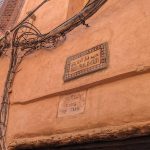
The Almoravids found Marrakesh
It was built as the northern terminus for caravans that had crossed the Sahara. For more than nine centuries since, the medina has been not a preserved ruin but a working maze of trade and daily life; it became a World Heritage Site in 1985. The storytellers and food stalls of Jemaa el-Fnaa are protected as intangible heritage.
📍 If you go

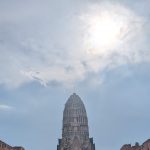
Ayutthaya is founded, and burns four centuries later
The capital on an island between rivers grew rich on east-west trade and was destroyed by the Burmese army in 1767. The Buddha head held in the roots of a fig tree is what centuries of being broken and left alone look like.
📍 If you go

4 When companies ruled the sea
Around 1557 the Ming allowed the Portuguese to settle at Macau. No state had taken territory; a body of merchants had been given leave to stay. The Jesuits began building St. Paul’s in 1602, and a fire in 1835 left nothing of it but the facade.
In that same year, 1602, Amsterdam produced an invention of another kind: the Dutch East India Company, the VOC. It is counted as the world’s first joint-stock company, raising money from a wide public through shares and sending out fleets on the proceeds. The capital crossing the sea was no longer a city’s but that of investors nobody had met — control of the sea passed from cities to companies. The wealth of the Asian trade paid for the threefold extension of the canal district from 1613, and that is how the city got its fan shape.
The shift shows in painting too. Rembrandt’s The Night Watch, finished in 1642, is a group portrait of a civic militia company, and the people who commissioned it were merchants and citizens rather than nobles. In the Amsterdam of the Golden Age, even the subject of a painting had changed hands.
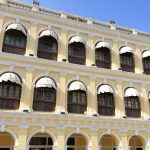
Portugal is allowed to settle at Macau
Ming China permitted a settlement, and it became the hinge of East Asian trade. The Jesuits began St. Paul’s in 1602; a fire in 1835 left only the facade. The wave-patterned pavement of Senado Square is the same design as Lisbon’s.
📍 If you go

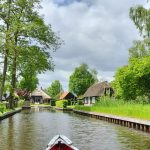
The Dutch East India Company (VOC) is founded
Often called the first joint-stock company. Asian trade paid for the threefold expansion of the canal ring from 1613, which is why the city is shaped like a fan. The houses along the canals are narrow because they were taxed on their frontage.
📍 If you go

5 A king and a sultan lay out a port
By the seventeenth and eighteenth centuries it was states, not merchants, that set the shape of trade. In 1673 Copenhagen finished digging the Nyhavn canal so that ships could come in off the sea as far as the king’s new square, and the quay became a sailors’ drinking street. Hans Christian Andersen lived among those colored houses for years. The “Copenhagen” that turns up in more photographs than any other is a piece of seventeenth-century harbor engineering.
Under the Methuen Treaty of 1703, Britain — at war with France — cut the duty on Portuguese wine in exchange for letting British wool into Portugal. The wine fortified with brandy so that it would survive the long voyage is port. The British trading names along the lodges of Gaia date from that treaty. A treaty decided the shape of a taste.
In 1764 the sultan of Morocco had a French engineer lay out Essaouira. A grid-plan port town was drawn over a site the Portuguese had fortified in 1506 and abandoned within a few years. Cannon stand along European-style ramparts, and inside is a maze of white houses.
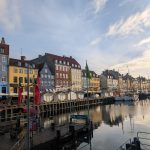
The Nyhavn canal is dug
It was cut so that ships could reach the King’s New Square from the sea, and became a sailors’ drinking street. Hans Christian Andersen lived among those colored houses for years. The most photographed view of Copenhagen is a piece of seventeenth-century harbor engineering.
📍 If you go

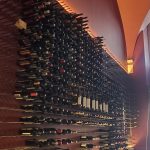
The Methuen Treaty sends port wine to Britain
Britain, at odds with France, cut the duty on Portuguese wine in exchange for admitting British woolens. The wine was fortified with brandy so that it would survive the voyage; that is port. That treaty is why British trading names still line the lodges in Gaia.
📍 If you go

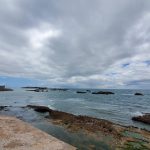
A sultan lays out Essaouira as a port town
On a site the Portuguese had fortified and abandoned in 1506, the sultan had a French engineer design a grid-planned port. Cannon line the European-style ramparts; inside is a maze of white houses. It prospered as Morocco’s Atlantic trading port.
📍 If you go

6 When states ruled the sea
In 1797 the Republic of Venice, eleven hundred years old, surrendered to Napoleon. It was the end of the age in which a city could hold the sea on its own. The Doge’s Palace was a residence and at the same time the council chamber, the law courts and the prison; the Bridge of Sighs is the crossing from the hall of judgment to the cells. Napoleon carried the horses of St Mark off to Paris, and they came back later.
What came next was the state. The Treaty of Nanking of 1842, at the close of the Opium War, ceded Hong Kong Island to Britain, and 155 years of British rule began. The Star Ferry between Kowloon and Hong Kong Island started running in 1888 and still crosses the same water in ten minutes.
From an alliance that put its treasury on a neutral island to an age when states took whole harbors, control of the sea changed hands: cities, then companies, then states. What survives, though, is the same in every age: buildings that were warehouses, a craft shut up on an island, a painting a merchant ordered, and a wine whose shape a treaty decided.
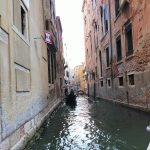
The Republic of Venice surrenders to Napoleon
The end of eleven centuries as a maritime republic. The Doge’s Palace was residence, parliament, court and prison at once, and the Bridge of Sighs runs from the courtroom to the cells. Napoleon took the horses of St Mark’s to Paris; they later came back.
📍 If you go

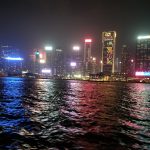
The Treaty of Nanking cedes Hong Kong Island — for 155 years
The island was ceded as a result of the Opium War, beginning a century and a half of British rule. The Star Ferry between Kowloon and Hong Kong Island opened in 1888 and still crosses the same water in ten minutes.
📍 If you go

Standing on the ground of this story
For the sea of the cities, Venice; for the sea of the companies, Amsterdam and Macau; for the sea of the states, Hong Kong. The trading city of the north is Bruges, the end of the land road is Marrakesh, and the royal capital in the east is Ayutthaya. The story continues in the Age of Discovery. Other eras are in the history section, where the table pairs events with what you can still visit.
Sources for dates and names are behind the “Source” link on each event card.