
Portugal sits at the far western edge of the Eurasian landmass — the last of Europe before the Atlantic. Medieval cobbled streets, the strains of fado, blue azulejo tilework and the still-living legacy of the Age of Discovery make it a nostalgic, quietly refined country.
Portugal’s ties with Japan — where Travelers Route is based — run nearly 500 years deep, back to the Portuguese firearms that reached Tanegashima in 1543. The missionaries who set sail from Lisbon’s Belém district quite literally reshaped Japan’s Sengoku era, and tracing their point of departure adds a layer of meaning to any visit. Travelers Route concentrated its earliest reporting on Portugal, and covers multi-layered itineraries around Lisbon, Porto and Sintra from both sides: planning logic and on-the-ground survival.
Still weighing Spain against Portugal? The quickest way forward is to settle the direction with our comparison guide first. → Spain or Portugal? — Choosing by cost, days and atmosphere
If you would rather start from what there is to see, Portugal: 15 Top Attractions lays out the classics in the order you would actually walk them, with prices and timings.
If safety is on your mind, read Is Portugal Safe? first — it works through the official advisory, where incidents actually happen, and what to do about it.
By length of stay: choose from your travel style
The right length for a Portugal trip depends on how deeply you want to know the country. Every model itinerary below is based on our editors’ first-hand travel, covering efficient routes through each city, what must be booked ahead and what to watch out for on the ground.
First time in Portugal — 3 days in Lisbon
For a first visit, three days settled in the capital is the best play. The Age of Discovery monuments of the Belém district, the medieval maze of Alfama by tram 28, fado after dark — plus the story of how the city was redesigned after the great earthquake, all covered in depth.
→ Lisbon 3-day itinerary — tracing the Age of Discovery
World Heritage and wine culture — 2 days in Porto
Porto, a World Heritage city at the mouth of the Douro, shows a different face from Lisbon: a merchant city that grew rich on the wine trade. The cobbles of the Ribeira district, the port-wine cellars on the opposite bank, and the modern architecture epitomized by the Casa da Música. The city is compact, and two days are enough to savor it deeply.
→ Porto 2-day itinerary — a World Heritage city woven from wine and architecture
Day trip from Lisbon — the palaces of Sintra
Staying in Lisbon three days or more? Give one to Sintra. The kaleidoscopic Romanticist architecture of the Pena Palace, the ruins of the Moorish Castle and the National Palace of Sintra: a route that compresses the three pillars into three hours and packs the most into your palace circuit.
→ The optimal Sintra day trip — the palace circuit compressed into 3 hours
The full circuit — Lisbon + Porto in 7 days
With time to spare, the golden pattern is seven days: 3 in Lisbon + a Sintra day trip + 3 in Porto + 1 day in transit. Head north from Lisbon on the Alfa Pendular high-speed train and enjoy both cities in depth on a single trip. The guide covers everything from the timing of flight, hotel and rail bookings to budget benchmarks.
→ Portugal in 7 days — the complete Lisbon + Porto route, in depth
Essential prep before you go
The two most common failures on a Portugal trip are connectivity and payment. Prepare in advance and 90% of the trouble vanishes.
Choosing Wi-Fi / SIM / eSIM
Google Maps, hotel check-in, booking screens on the go — a data connection is non-negotiable when you travel. The standard playbook: eSIM for solo travelers, pocket Wi-Fi for groups, a local SIM for long stays. We compare prices, speeds and pickup logistics for each service with real examples.
→ Portugal Wi-Fi / SIM comparison guide — the best pick among eSIM, rentals, local SIM and roaming
Booking intercity trains
Between Lisbon and Porto, the Alfa Pendular high-speed train is the best option. Book 30 days ahead and the fare drops by nearly half, so move early once your dates are fixed. The guide explains how to book, which seat class to choose and how boarding works on the day.
→ Lisbon–Porto rail booking guide — how to get Alfa Pendular tickets and choose seats
Choosing where to stay
Lisbon is a city of seven hills, and which area you stay in changes how comfortable the trip feels. We compare the best base by traveler type: first visit, family, nightlife, business.
→ Where to stay in Lisbon — an area-by-area guide
Travel authorization (ETIAS) and travel insurance
Visa-exempt visitors on short trips will need ETIAS authorization (check the latest requirements before you go). With medical costs in Europe running high, travel insurance is another piece worth arranging in advance.
→ ETIAS (European travel authorization) — the complete guide / How to choose travel insurance
Go deeper by theme
Seven themes no Portugal trip is complete without — each explored in detail in its own article.
- Age of Discovery heritage — the Jerónimos Monastery, the Tower of Belém, the Monument to the Discoveries. The starting point of the Tanegashima firearms and Nanban-culture story (Walking the Age of Discovery)
- Port wine culture — cellar visits at Taylor’s, Sandeman, Graham’s and more. Styles and tasting etiquette in (the complete port wine guide)
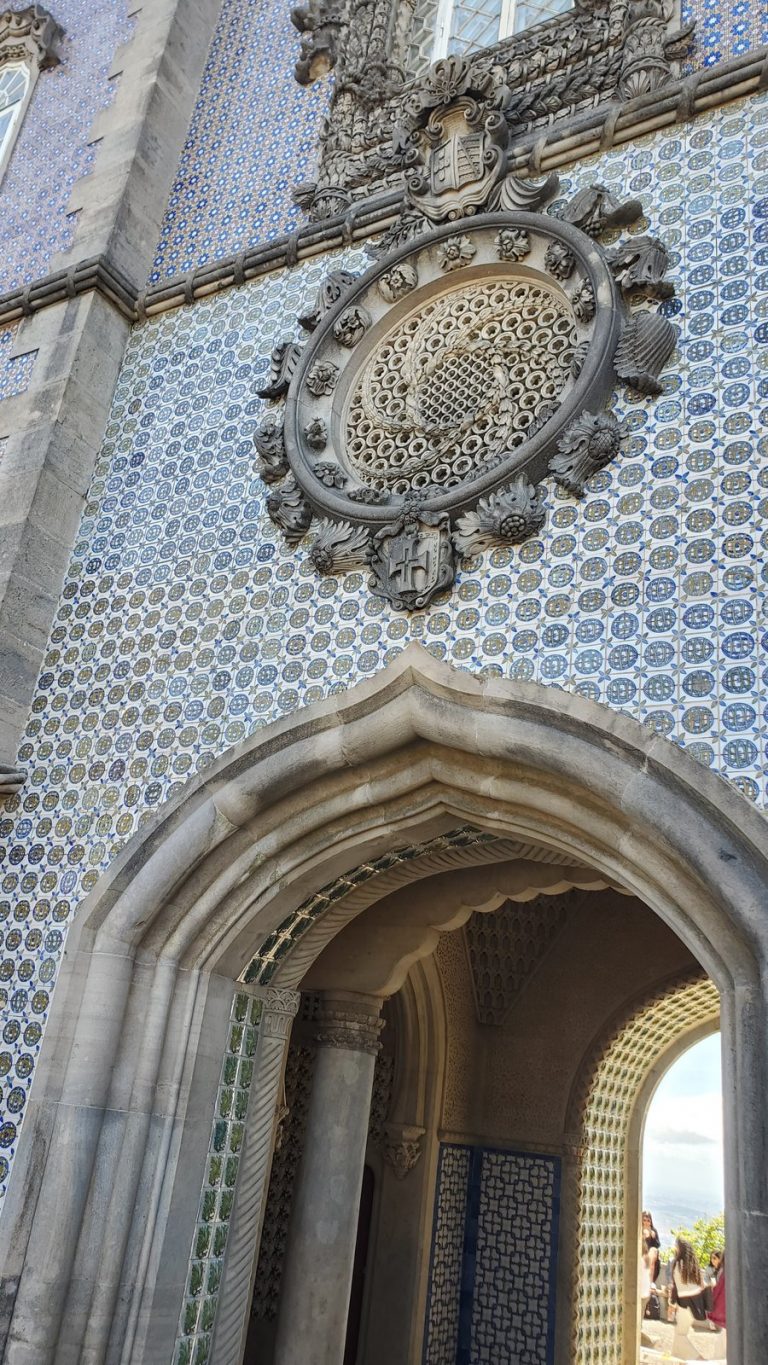
- Azulejos (blue tiles) — the National Azulejo Museum, Porto’s São Bento station and five centuries of stories (the complete azulejo guide)
- Fado — the old fado houses of the Alfama district, with singers performing at arm’s length (a night of fado — the complete guide)
- Tram 28 — the yellow streetcar that tours the city itself. How to ride it and how to dodge pickpockets (the complete tram 28 guide)
- World Heritage architecture — the three great World Heritage inscriptions — the Jerónimos Monastery and Tower of Belém in Lisbon, the historic center of Porto, and the Cultural Landscape of Sintra
- Saudade — life after the trip — the sense of longing a Portugal trip leaves you with, and what it does to your outlook (Living with saudade)
Best season and budget benchmarks
- Best season: May–June and September–October. Stable weather, thinner crowds at the sights, mid-range hotel rates
- Times to avoid: July–August brings European vacation crowds and hotel-price spikes; December–February means rain and short daylight hours
- Budget benchmark (5 nights / 7 days, 2025): flights ¥150,000–220,000 + hotels €600–900 + meals €630 + sightseeing €250–350 = roughly ¥450,000–600,000 per person (flight and total figures are benchmarks in Japanese yen for departures from Japan)
- Flights: Lisbon (LIS) is the main international gateway; typical long-haul routings connect via Doha (Qatar Airways), Dubai (Emirates) or Frankfurt (Lufthansa)
→ The best time to visit Portugal, and what it costs — month-by-month climate, prices and budgets
On-the-ground survival
- Language: English works at the tourist sights; older locals speak Portuguese only. Just “Bom dia” (good day) and “Obrigado/a” (thank you) will get you a noticeably warmer welcome
- Meal times: lunch 1–3 p.m., dinner 8–10 p.m. Turn up at 6 p.m. expecting dinner and the restaurant will still be closed (a holdover of siesta culture)
- Credit cards: Visa/Mastercard work in nearly every shop in tourist areas. Small neighborhood places are cash only — carrying €100–200 in cash is recommended
- Power plugs: Portugal uses type C. With a multi-plug adapter, one unit covers a whole European trip
- Tipping: not required (service is included). At most, round up the bill when paying cash at restaurants
- Tap water: drinkable. If you prefer, mineral water costs €0.5–1
→ Safety and scams in Portugal (pickpocketing and theft tactics, and how to avoid them) / Local tours compared (where to book your experiences)
Pair it with neighboring Spain
As an extension of a Portugal trip, the Spain–Portugal circuit that adds Madrid or Barcelona is a popular plan. Madrid to Lisbon is about 1 hour 15 minutes by direct flight (there is no through high-speed rail, so flying is the realistic choice). Three days in Madrid are enough to go deep on the “Golden Triangle” of the Prado and the Reina Sofía, tapas culture and flamenco on its home ground.
→ Madrid 3-day itinerary — the Golden Triangle and tapas culture
→ Spain–Portugal 10-day itinerary — the complete route west from Barcelona to Porto
→ Spain travel guide (hub page) — the entrance to all our Spain articles: Madrid, Barcelona, Toledo and Tarragona
Scenes of Portugal
Photos taken on location by our editorial team.


About Travelers Route
Travelers Route is a travel publication specializing in model itineraries for international trips, published from Japan. Centered on Europe — Portugal, Spain, France and beyond — its strengths are efficient routes based on first-hand experience, the details that never make it into guidebooks, and practical know-how for bookings, connectivity and transport on the ground. Every article is grounded in our editors’ own on-location reporting — the same first-hand research behind our Japanese edition — at a depth guidebooks cannot offer.
This country’s history, through places you can visit
Born out of the Reconquista and connected to the world by the Age of Discovery. The grid of central Lisbon is the rebuilding after the earthquake of 1755.
King Dinis founds Portugal’s first university


