Field notesLate October 2025 · a first-hand stay of three nights in total, before and after an Iceland loop
Prices & rules last checkedJuly 2026
Copenhagen’s greatest weapon is its smallness. The metro runs from the airport to the center in 12 minutes, the main sights sit within cycling range, and the density of food and design is among the highest in Europe — here is how to reach the core of Copenhagen in two days.
The short version — plan backwards from “Nyhavn in the morning”
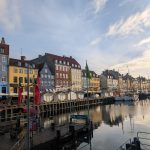
- Nyhavn at 9–11 a.m.: the colorful houses catch the light and the crowds are still thin. From dusk, lamps and reflections on wet cobbles make it an entirely different place — it is worth going twice, morning and night
- From the airport, just take the metro: line M2 reaches the center in about 12 minutes for 36 DKK (as of 2026), and it runs through the night, so a late arrival is no problem
- Build your eating around Torvehallerne market: from smørrebrød, the traditional open sandwich, to the bakeries everyone is talking about, one covered market has it all
- Visiting three or more paid sights? Consider the Copenhagen Card: from 559 DKK for 24 hours it covers 80 attractions plus unlimited transit — Rosenborg Castle plus a canal cruise plus a museum already pays for it
Nyhavn — one canal with two faces, morning and night

Copenhagen’s postcard face, Nyhavn, is a former sailors’ quarter along a canal dug in the 1670s. Wandering it is free, and it is a few minutes on foot from Kongens Nytorv station on metro M2. The photographer’s window is 9–11 a.m. — light falls across the colorful facades of the north quay, and a last quiet lingers before the cafés open (the standing advice as of July 2026). The canal boat tours leaving from here loop past the Opera House and the Little Mermaid, handing you the city’s whole shape within your first hour.

Then comes nightfall. Garland lights and the warm glow of the restaurants stream across wet cobblestones, and the daytime postcard turns into a textbook of hygge. In late October the sun sets around 4:30 pm — which means the “Nyhavn by night” show plays before dinner, one of the quiet advantages of an autumn or winter visit.
The royal quarter — a waterfront walk from Amalienborg to the Little Mermaid

Head north along the water from Nyhavn and the sights fall in line: Amalienborg Palace, rococo palaces ringing an octagonal square (the royal residence — changing of the guard at noon), the marble-domed Frederik’s Church, the star-shaped Kastellet fortress, and finally, on a rock by the sea, the Little Mermaid. She is mocked as one of the world’s great letdowns for her size, but the composition — Andersen’s fairy-tale mermaid quietly gazing across at the industrial shore — is unexpectedly poetic in person. From Nyhavn, the waterfront round trip is an unhurried 1.5–2 hours.

Food — the capital of smørrebrød and bakeries

The doorway into Danish food culture is smørrebrød — the traditional open sandwich, toppings piled high on rye bread. At the specialist counters of the covered Torvehallerne market, the beginner’s move is to order one or two each of the classics: pickled herring, tiny shrimp, roast pork. The market is packed with coffee stands and delis too, and doubles as a first-rate refuge on a rainy day. This city is also the epicenter of the global bakery boom — queueing in the morning for a cardamom roll or a Danish (known locally as “Vienna bread”) is part of the full Copenhagen food experience. For a snack later, finish with a hot dog from one of the famous street carts.
Design and crowns — Rosenborg Castle and the Design Museum
Copenhagen’s other axis is design. The Designmuseum Danmark with its rows of Hans J. Wegner chairs, the Renaissance Rosenborg Castle (around 150 DKK for adults, timed entry, the royal crowns in the basement treasury; as of July 2026), and the LEGO flagship store — you can travel between the origins of Nordic design and its present in half a day. Rosenborg caps visitor numbers, so booking ahead on the official site is the safe play. The adjoining King’s Garden is free — on a fine day, take a coffee to the lawns.
GetYourGuide
Book a canal cruise from Nyhavn
The fastest way to grasp the city is from the water. The classic one-hour loop passes the Little Mermaid and the Opera House, and most departures are free to cancel up to 24 hours ahead.
See canal cruises →Practical notes for Copenhagen
- Airport to center — metro M2, about 12 minutes, 2 zones / 36 DKK (as of 2026). Direct from Terminal 3, running all night
- Getting around — metro, buses and harbor buses share one zone system. Pay with a contactless credit card or the DOT Tickets app. The city is essentially cashless; you will hardly ever need coins
- Copenhagen Card — from 559 DKK for 24 hours (December 2025 pricing). Covers Rosenborg, canal tours, museums and airport transit — worth considering from three paid sights up
- Best season — summer’s long, bright evenings and cycling weather are the classic, but late October to December brings Christmas lights and peak hygge; the early sunsets just mean longer evenings to enjoy
- Pairing with Iceland — Copenhagen is a hub rich in direct Reykjavik flights; we did two nights on the way out, the Iceland loop, then one night on the way home
Frequently asked questions
How many days do you need in Copenhagen?
Two days will get you to the core. The city’s strength is how small it is: the metro reaches the centre from the airport in 12 minutes and the main sights sit within cycling range.
How do I get from the airport into the city?
Metro line M2 takes about 12 minutes and costs 36 DKK. It runs through the night, so a late arrival is not a problem.
Is the Copenhagen Card worth it?
From 559 DKK for 24 hours it covers 80 attractions plus unlimited transport. It is worth considering if you plan to visit three or more paid sights — Rosenborg Castle plus a canal cruise plus a museum already pays for it.
What is the best time to photograph Nyhavn?
Between 9 and 11 a.m., when the colourful houses on the north bank catch the light and the crowds are still thin. After dark the lamps and their reflections on the cobbles make it a completely different place, so it is worth going twice.
Where to go from here
- The country at a glance → Denmark Travel Guide
- The island of wonders we flew to from here → Iceland 5-Day Itinerary
- Choose your next trip by food → Food Travel Destinations
- Start from the very first question → Your First Trip to Europe — Where to Go?
The history here
Why the places, the food and the artworks in this article are where they are.
The Nyhavn canal is dug
It was cut so that ships could reach the King’s New Square from the sea, and became a sailors’ drinking street. Hans Christian Andersen lived among those colored houses for years. The most photographed view of Copenhagen is a piece of seventeenth-century harbor engineering.
📍 If you go


