
Madrid is Spain’s political and cultural capital — and Europe’s densest concentration of great art museums. The “Golden Triangle” of the Prado, the Reina Sofía and the Thyssen-Bornemisza makes this one of the rare cities where you can stand before Picasso’s Guernica and Goya’s Naked Maja in a single sweep. With three days you can fit in the classic museum circuit, the Royal Palace, the tapas culture, and a day trip out to Toledo — all without wasted motion.
How the city works
To move around Madrid efficiently, you only need to hold three central areas in your head:
- Prado to Retiro Park — the cultural zone where the museum “Golden Triangle” lines up, around metro Banco de España
- Sol to Plaza Mayor — the heart of the old town. From Puerta del Sol (Spain’s Kilometre Zero) the Royal Palace and the cathedral are an easy walk
- La Latina to Malasaña — tapas, nightlife and the engine room of the city’s youth culture
The cleanest three-day split: day 1 for the museums, day 2 for the old town and the Royal Palace, day 3 for the Toledo day trip.
Day 1: The Golden Triangle in one sweep
Start with the Prado (doors open 10:00)

The Prado ranks among the world’s greatest museums: Velázquez’s Las Meninas, Goya’s Naked Maja, Clothed Maja and Saturn Devouring His Son, Bosch’s Garden of Earthly Delights — textbook masterpieces hang room after room. Allow three hours at minimum, half a day if you want to go deep.
The first hour after opening, 10:00–11:00, is the golden window — few tour groups, and you can have Las Meninas almost to yourself. Admission is €15 (buying online in advance is recommended). The final two hours are free for the permanent collection (Mon–Sat 18:00–20:00, Sun/holidays 17:00–19:00; temporary exhibitions half price) but reliably packed. If you want to look properly, pay for the quiet morning; if budget wins, take the free slot.
GetYourGuide
Prado Museum skip-the-line entry ticket
A timed-entry ticket that skips the queue, with free cancellation up to 24 hours before. See the masterpieces of Velázquez and Goya at your own pace.
See ticket details →Lunch at a market near Retiro Park
Catch your breath in Retiro Park behind the Prado, then head for lunch at Mercado de San Antón in Chueca (about 1.5 km from the Prado — a good 20-minute walk or a short metro hop) or Mercado de San Miguel on the old-town side. The classic order: one or two plates of tapas and a caña (small beer) for €10–15. After eating, loop back toward the museum mile (Paseo del Prado) for the afternoon.
Afternoon: Guernica at the Reina Sofía
The Museo Reina Sofía covers Spanish art from the 20th century onward. The centerpiece is Picasso’s Guernica — the monumental canvas hangs in a room of its own. The Dalí and Miró collections are strong too. Allow 2–3 hours; admission €12 (the €32.80 “Paseo del Arte” combined ticket with the Prado is the better buy).
If you have anything left, complete the Golden Triangle at the Thyssen-Bornemisza (€14), within walking distance — a masterpiece of the private-collection genre, running from Raphael to Hopper and Lichtenstein. It closes at 19:00.
Evening: a tapas crawl in La Latina

Take the metro to La Latina. Calle Cava Baja is lined shoulder to shoulder with veteran tapas bars. The local way is a three-stop crawl — Casa Lucas (Ibérico pork), Juan Manuel (traditional tapas), La Concha (vermouth). Figure €8–12 per bar; around €30 total leaves you thoroughly full.
Day 2: The Royal Palace, the old town and a deeper dive into tapas culture

Royal Palace (Palacio Real) — be in line before the 10:00 opening

The Royal Palace of Madrid is one of Europe’s largest (2,800 rooms) and still a working palace, used today only for state ceremonies. The highlights: the opulent Throne Room, the Gasparini Room with its Tiepolo ceiling painting, and the changing of the guard. Admission €14; the gates open at 10:00 — arrive at 9:30 and the front of the line is yours.
On the first Wednesday of each month at 12:00 (no ceremony in January, August or September; as of July 2026), the full-parade changing of the guard, the Relevo Solemne (about 50 minutes), turns out more than 400 troops and around 100 horses. If your dates line up, it becomes the highlight of a Madrid trip. A regular-scale changing of the guard also runs on Wednesday and Saturday mornings (shortened hours in summer).
Plaza Mayor and Mercado de San Miguel

Ten minutes on foot from the palace is Plaza Mayor, the handsome square enclosed on all four sides by 17th-century Habsburg architecture. Take a breather at one of the terrace cafés.
Adjacent Mercado de San Miguel is an elegant glass-walled market hall turned gourmet food court — jamón, cheese, oysters, even sushi — ideal for lunch. Allow an hour and around €20.
Afternoon reset in Retiro Park

Retiro Park is the reset button for museum fatigue and tired feet. Row a boat on the 19th-century lake (€8 for 45 minutes), and see the Palacio de Cristal (a glass exhibition pavilion) and the rose garden. Allow 1.5–2 hours; it sits right by metro Retiro.
Evening: flamenco at the source
Madrid stands with southern Andalusia as a capital of flamenco. Book a dinner show (€60–90) at Corral de la Morería (a tablao with more than 50 years of history) or Torres Bermejas (open since 1960 — the historic stage where Camarón de la Isla performed for years). Reservations essential; allow two hours. Watching first-rate dancers from arm’s length is in a class of its own.
GetYourGuide
Flamenco show and dinner at a historic tablao
Top-flight flamenco in its Madrid home, paired with dinner. A perennially popular way to end the day.
Book tickets →Day 3: Toledo day trip — the medieval capital of Spain
Getting to Toledo and how to time it
Toledo is 33 minutes from Madrid by high-speed Avant train, €13–21 each way, with one or two departures an hour from Atocha station. The entire walled old town is a World Heritage Site — a fortress city known as the “city of three cultures,” where Christian, Islamic and Jewish traditions coexisted.
The classic shape: out on a train around 8am, back around 17:00. An efficient loop runs city gate → cathedral → Church of Santo Tomé (El Greco’s The Burial of the Count of Orgaz) → the Jewish quarter and its synagogues → the viewpoint overlooking the city (by the Parador). For each sight’s details, prices and opening hours we defer to our Toledo travel guide; this section sticks to the day-trip logistics.
The cathedral and El Greco
Toledo Cathedral is a masterpiece of Spanish Gothic, holding works by El Greco, Titian and Goya. Admission €12 (as of July 2026); allow 1.5 hours. Don’t miss El Transparente, the altarpiece lit by natural light falling from the ceiling.
Nearby, the Church of Santo Tomé permanently displays El Greco’s greatest work, The Burial of the Count of Orgaz — a rare chance to stand before the actual canvas and absorb its composition and Mannerist intensity (€4, 30 minutes).
Toledo’s three-culture legacy — the synagogues
In the Jewish quarter, the Sinagoga del Tránsito has a magnificent Mudéjar interior and now houses the Sephardic Museum. Together with Santa María la Blanca next door (a former synagogue, now a church), it tells the history of coexistence and conversion. €4 each.
The mirador across the Tagus
In the late afternoon, leave through the southern gate and cross the Tagus. From the viewpoint on the Parador de Toledo side, the whole of old Toledo spreads out before you — the fortress city silhouetted in the sunset makes for the timeless shot of a Spain trip. Around €20 round trip by taxi; allow an hour.
Where to stay in Madrid

Madrid’s hotel districts boil down to three, by purpose:
- Puerta del Sol / Gran Vía — access in every direction, lively at night. Best for a first visit
- Retiro Park / Salamanca — upscale and residential, the museums within walking distance, quiet and secure. For a calmer, more polished stay
- Malasaña / Chueca — local feel, youth culture, plenty of apartment stays. For return visits
Practical notes for Madrid
- Best season: April–May and September–October. July–August pushes toward 40°C; December–February brings chilly mornings and evenings
- Meal times: lunch runs 14:00–16:00 and dinner 21:00–23:00 local rhythm. Turn up at six expecting dinner and you’ll find the kitchens closed
- Metro: single tickets €1.5–2; the 10-ride Metrobus at €12.2 is unbeatable value. The tourist travel card is hard to break even on
- Siesta: many independent shops close 14:00–17:00. Shop in the morning or after 19:00
- Museum closing days: the Prado opens daily, Mondays included (10:00–20:00); the Reina Sofía closes on Tuesdays; the Thyssen has no weekly closing day but runs short hours on Mondays, 12:00–16:00 (free in that window). Doing all three on a Monday? Build the day around the Thyssen’s four-hour slot (as of July 2026)
Where to go from here
If Spain has you hooked, neighboring Portugal pairs with it naturally. These guides help you build out the wider trip.
- Barcelona 3-Day Itinerary — Spain’s other great city, and the home ground of Gaudí’s architecture
- Toledo Travel Guide — the deep dive on the three-culture World Heritage city, 33 minutes away by high-speed train
- Portugal Travel Guide — the hub page for planning the Iberian extension from Madrid
- Spain and Portugal in 10 Days — the classic two-country circuit built around Madrid as its starting point
The history here
Why the places, the food and the artworks in this article are where they are.
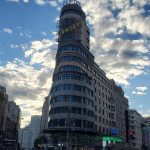
Philip II moves the court to Madrid
Madrid has been the capital ever since the court settled almost exactly in the middle of the peninsula. The present Royal Palace was built after the old Alcázar burned in 1734, and is one of the largest palaces in Europe.
📍 If you go
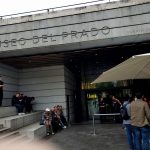
Madrid rises against Napoleon’s army
The rising of May 2 was put down by the executions on the 3rd. Goya painted that night six years later, and the man in the white shirt with his arms open hangs in the Prado. From the square where the rising began to the museum is a fifteen-minute walk.
📍 If you go
The Prado opens
The royal collection was put on public view. Velázquez painted Las Meninas (1656) at court, and it moved here from the palace. That is why three centuries of Spanish royal collecting can be seen in one building.
📍 If you go
Guernica is bombed
On April 26, in the Spanish Civil War, the German air force bombed the Basque town in support of Franco. Picasso painted it for the Paris Exposition that year and left instructions that it not return until democracy did. It came home in 1981.
📍 If you go


