
Toledo is 33 minutes from Madrid by high-speed train — a World Heritage fortress city where the medieval Spanish capital stands frozen in time. Known as the “city of three cultures,” it is a rare place where Christian, Islamic and Jewish architecture, lanes and history share the same walls. The overwhelming majority of visitors come on a day trip from Madrid, but this guide digs deeper — including the case for staying the night to see the sunset and the city lit up. The logistics of the Madrid day trip (timing the round trip) are covered on day 3 of our Madrid 3-day itinerary; this article handles the deep dive on each sight, plus what you need if you stay over.
How Toledo is laid out
Toledo is a natural fortress ringed on three sides by the Tagus river, the whole town riding on a low hill. The entire old town was inscribed as a UNESCO World Heritage Site in 1986, and its street plan survives almost unchanged since the Middle Ages.
- Around the cathedral — the heart of town, with the old city radiating out from the cathedral (built 1226–1493)
- The Jewish quarter (Judería) — the west side: two synagogues, medieval lanes, and the Church of Santo Tomé, home of El Greco’s “The Burial of the Count of Orgaz”
- Around the Alcázar — the east side, a fortress of Arab origin on the highest point of the hill (now the Army Museum)
- Across the Tagus — the far bank, home to the Parador (state-run hotel) and the viewpoint over the whole townscape
Getting there from Madrid

- High-speed train (Avant) — 33 minutes from Madrid Atocha, €13.60–21 one way, 1–2 departures per hour (recommended)
- Intercity bus (ALSA) — about 1 hour from Madrid’s Plaza Elíptica, €6.40 one way; frequent departures and the budget choice
- Rental car — about 70 km on the A-42, roughly 1 hour. The old town restricts vehicle access and is riddled with one-way streets: park outside the walls (€10/day) and continue by bus or the public escalators
For a Madrid-based day trip, the classic pattern is a train out at 8–9 am and back at 5–6 pm. Eight hours on the ground covers nearly all the old town’s main sights.
The essential sights — the classic half-day circuit
Toledo Cathedral (Catedral Primada)

The masterpiece of Spanish Gothic, completed in 1493 after 267 years of construction. Inside, the stained glass, a collection of religious paintings by El Greco, Titian and Goya, and “El Transparente” — a Baroque altarpiece lit by natural light falling from an opening in the ceiling — are overwhelming. Entry €12 (a single ticket covering the cathedral, choir, treasury, cloister and more; as of July 2026), allow 1.5 hours.
In peak season the same-day ticket line can run 30–60 minutes, so booking ahead is recommended. Tickets are sold on the official site or at the cathedral shop opposite the entrance.
GetYourGuide
Find Toledo tours and tickets
Compare and book day tours from Madrid and guided visits with cathedral entry — and skip the hassle of arranging everything yourself.
Browse tours and tickets →Church of Santo Tomé — El Greco’s masterpiece
A 7-minute walk from the cathedral, on the way into the Jewish quarter, the Church of Santo Tomé (founded in the 12th century; the present building is 14th-century Mudéjar) permanently displays El Greco’s greatest work, “The Burial of the Count of Orgaz” (1586–88). Standing before the actual canvas to absorb its composition and Mannerist expression is a rare opportunity. Entry €4, allow 30 minutes.
El Greco spent most of his life in Toledo, and his works are kept at several sites scattered across the town. Combine the church with the adjacent El Greco Museum (€3) for a 90-minute stop.
The Jewish quarter (Judería) — the emblem of three coexisting cultures

The Synagogue of El Tránsito (built 1357, with a magnificent Mudéjar interior) now houses the Sephardic Museum. Next to it stands Santa María la Blanca (a former synagogue, now a Christian church) — both sit in the back lanes of the Jewish quarter and tell the strange story of coexistence and conversion in medieval Spain: Jewish architecture owned by Christians and built by Muslim craftsmen. €4 each, about 1 hour for the pair.
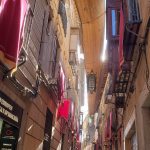
The quarter’s lanes form a small maze, and the classic way to take them in is a slow hour of wandering, camera in hand. Small shops selling the local damascene (metal inlay) craft dot the streets — good hunting for souvenirs.
If you have time to spare
The miradors (viewpoints) across the Tagus
In the late afternoon, cross the Tagus to the south bank (over Puente de Alcántara, or by bus/taxi). From the viewpoint on the Parador de Toledo side, the whole of the old town spreads out before you. The fortress silhouette against the sunset is one of the iconic shots of a Spain trip. Taxi round trip €20, allow 1 hour.
The Alcázar — Toledo’s highest point
The Alcázar is a castle standing on the town’s highest point, rebuilt from a fortress of Arab origin. It now operates as the Army Museum (Museo del Ejército), with collections of arms and armor from the Roman, Visigothic, Moorish and Christian eras. Allow 1.5 hours, entry €5. The view over the old-town rooftops is superb.
Monastery of San Juan de los Reyes
Founded by the Catholic Monarchs (Ferdinand II and Isabella I), the Monastery of San Juan de los Reyes (begun 1477, a fusion of late Gothic and Mudéjar) has a beautiful cloister and church interior. Allow 45 minutes, entry €4 — a building that embodies Spain at the completion of the Reconquista.
Food and souvenirs — Toledo specialties
- Stewed partridge (perdiz) — Toledo’s signature dish, a recipe with medieval roots. Around €20–25 at Casa Aurelio, the classic house founded in 1953, or at the Michelin-listed Adolfo (as of July 2026)
- Marzipan (mazapán) — the traditional almond-paste sweet. Buy it at Santo Tomé, in business since 1856 (3 Calle Santo Tomé, with a branch on Plaza de Zocodover)
- Damascene (damasquinado) — the traditional craft of inlaying gold and silver into steel; swords, jewelry and boxes €30–200
- Manchego cheese — the sheep’s-milk cheese of La Mancha, affordable at Toledo’s market
If you stay the night
Most travelers day-trip, but one night buys you the old town at sunset and the illuminations after dark — and once the day visitors leave, the back lanes fall into a stillness that is the Middle Ages itself.
- Inside the old town — boutique hotels within walking distance of the cathedral; maximum atmosphere, often no parking
- Parador de Toledo — the state-run hotel across the Tagus with the definitive view of the townscape; for a special stay (€180–280/night)
- Around the station, outside the walls — near the train station; good value and easy by car (€80–120/night)
Practical notes for Toledo
- Best season: April–May and September–October — stable weather, thinner crowds. July–August brings brutal heat above 40°C; December–February means cold mornings and evenings
- How long you need: 5–6 hours at a brisk pace for the main sights, 8 hours at ease, 24 hours with sunset and night views if you stay over
- Solid shoes are non-negotiable: the old town is steep cobbles throughout — heels and sandals are a mistake; wear sneakers or walking shoes
- Station to old town: city bus from the station forecourt (€1.5, about 15 minutes), plus the free public escalators partway up the hill
- Cathedral and church hours: many close or run irregular hours on Monday mornings and Sunday afternoons — check ahead
- Cards: Visa/Mastercard work at the tourist sights; small shops and the market in the Jewish quarter are often cash-only
Where to go from here
- The country at a glance → Spain Travel Guide
- The city you start from → Madrid 3-Day Itinerary
- Another World Heritage day trip → Tarragona Day Trip Guide
- Compare all our destinations → Destinations
The history here
Why the places, the food and the artworks in this article are where they are.
Alfonso VI of Castile takes Toledo
A great Muslim-ruled city passed to Christian rule, but neither the Muslim nor the Jewish population was expelled. A school of translators turned the Greek learning preserved in Arabic into Latin and sent it north into Europe. That is why a cathedral, synagogues and Islamic architecture stand in the same old town.
📍 If you go
Granada falls, the Jews are expelled, Columbus sails — all in one year
In the year the Reconquista ended, the Catholic Monarchs ordered the expulsion of the Jews. The synagogues of Toledo survived because they were converted into churches, and have since been restored and opened to visitors. The reason they survived is the history of the expulsion itself.
📍 If you go
El Greco paints The Burial of the Count of Orgaz
The masterpiece of a Cretan-born painter who settled in Toledo, it still hangs in the church that commissioned it. Because it was never moved to a museum, you can see it where it was made to be seen.
📍 If you go


