
Barcelona is the capital of Catalonia and a city built on architecture, home to Gaudí’s unfinished masterpiece, the Sagrada Família — and 2026 marks the 100th anniversary of Gaudí’s death. The city belongs to a culture visibly distinct from the rest of mainland Spain (Catalan is an official language, and the independence streak runs deep), pairing the openness of a Mediterranean port with a historic core where Gothic and Modernisme sit in layers. With three days you can dig efficiently into the Gaudí landmarks, the Gothic Quarter and even Montserrat monastery outside the city.
How Barcelona works — the three zones
To move around Barcelona efficiently, get straight the three zones that shape the city:
- The old town (Ciutat Vella) — the collective name for the Gothic Quarter, El Born and El Raval. A maze of cobbled streets dating back to Roman times
- The Eixample — the late-19th-century grid laid out by the urban planner Cerdà. Gaudí’s major works (the Sagrada Família, Casa Batlló, Casa Milà) cluster here
- The waterfront (Barceloneta and Poblenou) — a stretch of Mediterranean shoreline redeveloped from a fishing quarter. Beaches, seafood and contemporary architecture
The most time-efficient split of the three days: Day 1 for the Gaudí buildings, Day 2 for the Gothic Quarter plus the waterfront and Montjuïc, Day 3 for Park Güell and a Montserrat side trip.
Day 1: the summit of Gaudí’s architecture

First thing: the Sagrada Família (doors open at 9)
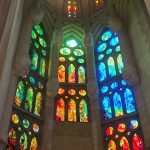
The Sagrada Família is Gaudí’s unfinished magnum opus, under construction for more than 140 years since work began in 1882. On June 10, 2026 — the centenary year of Gaudí’s death — the central Tower of Jesus (172.5m) was completed and consecrated, and since October 2025 this has been the tallest church in the world. The remaining Glory Façade is expected around the mid-2030s. The forest-like interior, washed in natural light, is an overwhelming experience that no photograph conveys. Allow at least 1.5 hours, or 2.5 with a tower climb.
Basic entry is €26, or €36 including tower access (as of July 2026). Advance booking is essential — same-day tickets mean hours in line, and you will likely miss your preferred time. The 9 am opening slot beats the tour-bus groups, and it is the hour when morning sun through the east-facing stained glass turns the Nativity Façade gold.
GetYourGuide
Find Sagrada Família tickets and tours
Booking ahead is essential for the Sagrada Família. Compare and reserve entry tickets, tower-access options and guided tours.
Browse tickets and tours →Casa Batlló and Casa Milà (Passeig de Gràcia)

Two metro stops from the Sagrada Família is Casa Batlló (Passeig de Gràcia 43), an apartment building that Gaudí remade top to bottom in Modernisme style — a vividly colored façade of sea blues and bone motifs, and an organic interior that stops you in your tracks. Entry €29–39, about 1.5 hours.
A five-minute walk brings you to Casa Milà (La Pedrera): undulating stone walls, warrior-like rooftop chimneys, late-period Gaudí’s organic forms pushed to their limit. The rooftop view over Barcelona is a must, and the nighttime illumination tour (€39) is popular too.
GetYourGuide
Find tickets and tours for the Gaudí landmarks
Compare and pre-book entry tickets and guided tours for the Sagrada Família, Casa Batlló, Casa Milà and more.
Browse tickets and tours →Evening: pintxos and a Catalan night
For your first evening, the classic move is to claim counter seats in El Born — at El Xampanyet (a venerable cava specialist) or Cal Pep (seafood pintxos worth the queue) — and settle in with a Rioja or a glass of cava. Budget €30–50 a head. This seafood-first food culture is Catalonia’s own, a different animal from Madrid’s tapas.
Day 2: the Gothic Quarter, Barceloneta and Montjuïc
Morning on the cobbles of the Gothic Quarter

The Gothic Quarter (Barri Gòtic) is a cobbled labyrinth where medieval streets survive intact on top of Roman remains. Barcelona Cathedral (13th–15th century, Gothic), the Plaça del Rei and Els Quatre Gats — the café where the young Picasso spent his early years — reveal the layers of Barcelona that came before Gaudí. Allow 2–3 hours.
The cathedral rooftop (€3) gives a sweeping view over the old town, and in the underground Roman ruins (Museu d’Història de Barcelona, €7) you can walk along 2nd-century city walls. Essential for history lovers.
Lunch at Mercat de Sant Josep

Mercat de Sant Josep on La Rambla — better known as the Boqueria — is Barcelona’s largest covered market. Stalls of jamón, cheese, fresh juice and tapas line up shoulder to shoulder, making it a crash course in Catalan eating. Allow 1–1.5 hours, budget €15–25. Note that Bar Pinotxo, the beloved counter that ran here for over 60 years, moved to Mercat de Sant Antoni in 2023 — it is no longer inside the Boqueria.
Afternoon: beach and modern architecture in Barceloneta
Take the metro to Barceloneta, the former fishing quarter redeveloped along the shore in the 1990s. Pause on the Mediterranean beach, then stroll past Frank Gehry’s fish sculpture and the W Barcelona (Ricardo Bofill’s sail-shaped tower). Stopping at a chiringuito (beach bar) for fresh oysters and cava is a fine indulgence.
Evening: the view from Montjuïc

Metro plus funicular takes you up Montjuïc (173m above the sea), the main stage of the 1992 Barcelona Olympics and still dense with cultural venues — the stadium, the Palau Nacional, the Joan Miró museum. At night, the Magic Fountain show syncs music and light into one of the city’s signature spectacles. After nearly three years offline it restarted in October 2025, and now runs on 3–5 evenings a week only (summer: Wed–Sun from around 21:30; winter: Thu–Sat from around 20:00. Free, 20–30 minutes. As of July 2026). Days and times shift with the seasons, so check the official site before you go.
For dinner, come down the hill to Carrer de Blai in Poble-sec: a strip of pintxo bars where skewers run €1–2 apiece and locals hop from bar to bar all evening.
Day 3: Park Güell and a Montserrat day trip

Morning at Park Güell (enter right at the 9:30 opening)
Park Güell began as a garden-city development commissioned by Gaudí’s industrialist patron Eusebi Güell (never completed, later turned into a park). The mosaic serpentine bench, the 86 columns of the Hypostyle Hall and the terrace overlooking the city distill Gaudí’s nature-driven architectural ideals into a single place. Entry €18 (raised from €10 in 2026; as of July 2026), advance timed booking required, about 1.5 hours.
It is a 15-minute uphill walk from the metro, so an Uber from the center (€8–12) saves your legs. In the 9:30 window right after opening you can shoot photos with few crowds, and if you catch an FGC R5 train around 11 afterward (from Plaça d’Espanya, roughly hourly), the afternoon half-day at Montserrat fits without strain.
Afternoon: Montserrat monastery (train plus rack railway)

Montserrat is a holy site 50km west of Barcelona. An 11th-century Benedictine monastery sits partway up a wall of jagged rock formations rising to 1,236m, famed for the Black Madonna (La Moreneta). It is a spiritual anchor for the people of Catalonia — and Gaudí is said to have drawn inspiration from these very rock faces.
Access is by FGC line R5 from Plaça d’Espanya station (roughly hourly), about an hour, then the Aeri cable car or the Cremallera rack railway to the top — €25–35 return including the cable car. See Park Güell first thing, catch the R5 around 11, and you can devote the whole afternoon to Montserrat and be back in Barcelona around 5–6 pm. The classic program combines the monastery, the Madonna, the Escolania boys’ choir (weekdays at 13:00; no singing on Saturdays; no performances during the school holidays from late June to late August; as of July 2026) and a 15–30 minute viewpoint hike.
GetYourGuide
Find Montserrat half-day tours and tickets
Compare and book half-day tours from Barcelona (transport plus monastery entry and more) and rack-railway tickets — and skip the hassle of arranging each leg yourself.
Browse tours →Close the trip with a celebration dinner
End your Barcelona days with fine dining. Disfrutar — molecular gastronomy at its outer limit — ranks among the world’s most acclaimed restaurants and shows you where Catalan cooking is headed. Reservations are extremely hard to secure, so start trying months ahead, the moment your dates are fixed.
Where to stay
- Eixample (around Passeig de Gràcia) — Gaudí sights on foot, a metro hub, mostly upscale hotels. The default for first-time visitors
- Gothic Quarter / El Born — inside the old town, easy evening wandering, all atmosphere. A pickpocket hotspot, so stay alert
- Barceloneta — beach within walking distance; crowded with soaring rates in summer; suits families
- Around the Sagrada Família — good value, metro access everywhere, quiet at night
Practical notes for Barcelona
- Best season: April–May and September–October, mild under the Mediterranean climate. In July–August the European holiday crowds pack the sights and beaches, and hotel rates spike
- Language: Catalan and Spanish in parallel. English works at the sights; metro signage is in both languages
- Meal times: lunch 1–3 pm, dinner 9–11 pm. As in Madrid, turn up at 6 pm and you will find the kitchens closed
- Metro: the ten-ride T-Casual (€13.00) is the best value; airport T1/T2 to the city is €5.90 on line L9 (both revised January 2026; as of July 2026)
- Pickpockets: rife on La Rambla, in metro stations and at the major sights — keep tight control of your wallet in the Gothic Quarter at night
- The Sagrada Família, Park Güell and Casa Batlló require advance booking — same-day tickets are near-impossible or mean hours of waiting
Where to go from here
Using Barcelona as the gateway to a wider Spain–Portugal trip? Start with these.
- Spain Travel Guide — the hub for all our Spain coverage
- Madrid 3-Day Itinerary — pair the capital with Barcelona on one trip
- Tarragona Day Trip Guide — a World Heritage city of Roman ruins, about an hour away by regional train
- Spain and Portugal 10-Day Itinerary — the westward route across both countries, starting from Barcelona
The history here
Why the places, the food and the artworks in this article are where they are.
Work begins on the Sagrada Família
Gaudí took over the following year and gave it the rest of his life. It became a World Heritage Site unfinished and is still a building site. Walk the unchanged medieval Gothic Quarter first and you understand how strange this new cathedral must have looked a century ago.
📍 If you go


