Field notesJuly 2022 · three nights on the main island — San Marco on foot, the lagoon islands, a gondola
Prices & rules last checkedJuly 2026
No city changes more between a day trip and an overnight stay than Venice. By day the center fills with cruise passengers and day-trippers, but once evening falls the crowds drain from the lanes and only the sound of water remains — and that is where the real city begins. The honest summary: stay two or three nights on the main island and walk it in the early morning and at night. Since 2026 the access fee for day visitors has been in full operation, and the case for the overnight trip has only grown stronger.
How the city works — no cars at all, only feet and boats

Venice proper is a cluster of more than 100 small islands, built on piles driven into the lagoon shallows. No cars run here at all: you move on foot or by boat, and nothing else. The Grand Canal cuts an S through the city, six districts spreading from its banks — the sightseeing core of San Marco, the food and art of Dorsoduro, the market quarter around the Rialto — all within walking distance. Start by looking down from somewhere high, like the Campanile: once the “cluster of islands” structure clicks into place, the rest of your walking turns three-dimensional.
Piazza San Marco — golden mosaics and the palace of power

The best of St Mark’s Basilica is the interior, not the facade. Gold-ground mosaics cover the ceilings and domes so completely that, in the right light, the whole interior hazes gold. Basic entry is a cheap €3 (Pala d’Oro +€5 · museum +€7, as of July 2026); in high season, the smart move is a pre-booked timed slot to skip the line. Large backpacks are not allowed inside, so leave your bags at the hotel and come light. Next door, the Campanile bell tower has an elevator to the top, where the panorama in the photo above is waiting — we used timed priority entry there too.
The Doge’s Palace was the political nerve center of the Venetian maritime republic: the gilded staircase, the Great Council chamber without a single column, and the Bridge of Sighs that convicted prisoners crossed. There is no stand-alone ticket — entry is on the combined St Mark’s Square ticket with the Museo Correr and others (€26–35 · early-bird discounts available, as of July 2026). No backpacks here either. If you have time, a Secret Itineraries tour through the small cells and state offices also runs.
Getting around on water — vaporetto, gondola, traghetto

- Vaporetto (water bus) — single ticket €9.50 (valid 75 minutes). Riding three or more times? The 24-hour pass at €25, 48-hour at €35 or 72-hour at €45 pays off. Forgetting to tap the validator before boarding makes you liable for a fine — tap every single time, even with a pass
- Gondola — official city rates: €90 for 30 minutes by day, €110 for 35 minutes at night (after 7 p.m.), up to five people per boat. The price is per boat, not per person. The real value is not the Grand Canal but the minutes spent inside the narrow back canals, walls close enough to touch — Venice seen from the waterline is a different city
- Traghetto — a shared gondola that simply ferries you across the Grand Canal. €2 for a standing gondola ride: the connoisseur’s option
- Water taxi — airport to hotel takes about 20 minutes at around €110 (what we paid at the time). With a group, trading money for time is a fair deal
GetYourGuide
Book Venice experiences and skip-the-line entry
Priority entry for the Doge’s Palace and St Mark’s, shared gondola slots, Murano and Burano boat tours and more. In a city of long lines, booking ahead pays. Many with free cancellation.
See Venice experiences →Half a day on the lagoon — Murano, Burano, Torcello

The islands north of the city make a half-day to full-day loop by vaporetto. Murano is the island of Venetian glass — glassblowing demonstrations, and a glass shop down every lane. Burano is the fishermen’s island, its houses painted in blocks of saturated color, famous for lacework and for home cooking built on small lagoon fish. And Torcello — this, in fact, is where Venice began; of its heyday only the basilica and a museum remain, and today it is a silent island where a bell tower stands in a meadow. The contrast with the clamor of the main island is the whole point of the loop. The natural order is Murano → Burano → Torcello (a short hop from Burano).
Food — market delicacies and Dorsoduro nights
Venetian food puts the lagoon’s seafood first. The morning fish stalls of the Rialto Market are a spectacle in themselves, and the spring and autumn specialty is moeche — just-molted soft-shell crabs, fried whole. Squid-ink pasta and langoustine pasta are the trattoria standards, and Dorsoduro, the museum district, hides good restaurants and gelaterie a step removed from tourist pricing. As for Caffè Florian on Piazza San Marco (founded in the 18th century): take it, knowingly, as “a cup you pay history for”, cover charge included.
The 2026 access fee — day trips cost money, and overnight guests must register
As an overtourism measure, Venice operates an Access Fee for day visitors. In 2026 it applies on 60 days between April 3 and July 26 (mostly weekends and holidays), covering day visitors entering the old city between 8:30 and 16:00 — €5 if booked at least four days ahead, €10 at short notice. Hotel guests are exempt, but must register in advance and carry the QR code issued. Failing to register or pay exposes you to a fine of €50–300, so always check whether your date is covered on the city’s official site (cda.ve.it) (as of July 2026). If you are staying overnight, the whole procedure amounts to a registration — and the system itself is the answer to the question: Venice is a city to savor by staying over.
Practical notes for Venice
- Best season — spring and autumn are comfortable. Summer brings heat and crowds; late autumn through winter brings the chance of acqua alta, the high-tide flooding
- Walking — getting lost is the pleasure here. But the city is all cobbles and stepped bridges, so design the trip to move suitcases as little as possible
- Bags — large backpacks are barred from both St Mark’s and the Doge’s Palace. Sightsee light
- Booking — basilica, palace and bell tower can all be reserved online in advance to dodge the lines
- Onward travel — good connections by air, and high-speed trains link Venice to Florence and Rome. We flew on to Rome
Where to go from here
- The country at a glance → Italy Travel Guide
- Arriving from the Aegean → Greek island hopping guide
- Choose by art and architecture → Art & architecture destinations
- Start from the big picture → First trip to Europe — where to go?
The history here
Why the places, the food and the artworks in this article are where they are.
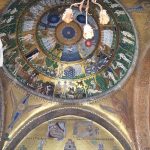
The relics of St Mark arrive in Venice from Alexandria
Merchants carried them out of Muslim-ruled Egypt — stole them, the story goes. A basilica was built to house them, and Mark became the city’s patron saint. The gold mosaics inside are also a self-portrait: a maritime republic that grew rich on trade with the East.
📍 If you go
Venice moves its glass furnaces to Murano
Officially to prevent fires; in practice to stop the technique from leaking out. Glassmakers were forbidden to leave the island and given privileges in exchange. That decree is the reason Murano glass is an island craft at all.
📍 If you go
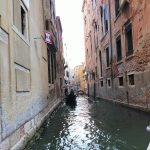
The Republic of Venice surrenders to Napoleon
The end of eleven centuries as a maritime republic. The Doge’s Palace was residence, parliament, court and prison at once, and the Bridge of Sighs runs from the courtroom to the cells. Napoleon took the horses of St Mark’s to Paris; they later came back.
📍 If you go


