Field notesApril 2024 · based on a first-hand day trip from Marrakesh
Prices & rules last checkedJuly 2026
When Marrakesh’s red-earth clamor starts to wear on you, head 175 km west. Two and a half to three hours by bus brings you to Essaouira, a port town of white walls and blue window frames: Atlantic wind, gulls wheeling over the ramparts, the smell of fish on charcoal. The air feels a world away from inland Marrakesh — and adding “Morocco’s other face” in a single day is precisely what this town offers. Here is how to get there and how to walk it.
What Essaouira is — a World Heritage city of wind and trade
Formerly Mogador. On a site where Portugal once held a trading post, the fortified town was laid out as a planned city around 1765 to the design of a French architect, and its medina was inscribed as a UNESCO World Heritage Site in 2001. Atlantic trade winds blow year-round — hence its name as “the wind city of Africa” — keeping it cool even in summer and making it one of the world’s windsurfing meccas. Against Marrakesh’s straight-down heat, this is a town of damp salt air.
Getting there from Marrakesh — tour or bus
| Option | Details (as of July 2026) | Best for |
|---|---|---|
| Shared day tour | Modest cost, round-trip transport included | Handing off all the logistics; seats both ways are guaranteed |
| Supratours (bus) | 100–140 DH one way, about 7 departures a day, about 3 hours | Independent planners; the terminal sits beside Marrakesh’s train station and is easy to find |
| CTM (bus) | Around 90 DH one way, fewer departures | If the times happen to fit; the Essaouira stop is a 20-minute walk from the medina |
We took the tour. With the bus, the rest stop and the return timing all handled for you, it is the rational choice for a day trip. If you self-book, Supratours is the convenient operator — but buy your return ticket (last departure around 6pm) the moment you arrive. The evening buses sell out first.
GetYourGuide
Essaouira day trip from Marrakesh
The shared day tour we actually used. Round-trip transport included, with generous free time in town.
See tour details →The walk — ramparts, medina and port, the three-part set
The Sqala (ramparts) — walking above cannons aimed at the Atlantic
Start at the sea ramparts (the Sqala). From the gun platform lined with bronze cannons, you look out over the Atlantic breaking on the reefs and the wheeling flocks of gulls. The stronger the wind, the higher the spray and the better the photographs — as for your hair, give it up now.

The medina — a blue-and-white labyrinth you can’t get lost in
Built as a planned city, Essaouira’s medina runs on nearly straight lines — the opposite of Marrakesh. The lanes of white walls with blue windows and doors are easy walking, and even when you stray, a main street is always close. The shops lean toward woodwork (thuya wood is the town’s specialty) and art galleries, and the selling is calmer than the pressure of the souks. Arriving worn down from Marrakesh’s bargaining, you’ll be startled by the quiet.


The port — blue fishing boats and the fish market
In the fishing harbor on the medina’s south side float the town’s emblem: blue wooden fishing boats. When the catch lands, the fish market surges to life and the gulls hit peak volume. At the stalls and canteens around the port, you pick the day’s fish and have it grilled over charcoal. The charcoal-grilled sardines are astonishingly cheap — worth the trip on their own.
Eating and buying — seafood and argan oil
For food, go straight to the seafood: grilled fish, fish tagine, grilled prawns — a different genre from inland Moroccan cooking. The signature souvenir is argan oil. The country around Essaouira is argan-tree territory, and on the road back to Marrakesh you may even meet the famous goats that climb the trees to eat the argan fruit. Culinary and cosmetic grades are both sold; the safe choices are specialist shops with proper quality labeling, or the women’s cooperatives’ own stores.
Practical notes for Essaouira
- Time on the ground — ramparts, medina, port and lunch fit into 4–5 hours, which matches the free time on most day tours almost exactly
- The wind — bring a layer even in summer; the seafront feels a notch cooler than inland
- Safety — among the calmer of Morocco’s tourist towns. Even so, keep bags in front of you at the port and in the squares
- If you stay over — the ramparts at dusk and the hushed morning medina are things no day trip sees. One night turns the town from a sight into a place where people live
Where to go from here
- Back to base → Marrakesh Travel Guide — how to walk the labyrinth medina
- The other great side trip → Sahara Desert Tour Guide (3 days / 2 nights)
- The country at a glance → Morocco Travel Guide
- Choose your next trip by scenery → Destinations chosen by scenery and city walks
The history here
Why the places, the food and the artworks in this article are where they are.
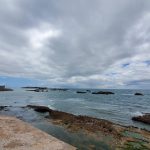
A sultan lays out Essaouira as a port town
On a site the Portuguese had fortified and abandoned in 1506, the sultan had a French engineer design a grid-planned port. Cannon line the European-style ramparts; inside is a maze of white houses. It prospered as Morocco’s Atlantic trading port.
📍 If you go


