Field notesApril 2024 · based on a first-hand stay
Prices & rules last checkedJuly 2026
Marrakesh is not a city of sights to tick off. You lose yourself in the labyrinth of the medina, haggle in the souks, and watch the square roar to life from a rooftop — the city itself is the experience. The honest summary: you can see the main sights in a day and a half. The city’s real value is what comes next — it is the base for Sahara desert tours and day trips to Essaouira. This guide covers both: how to walk the medina, and how to use the city as a hub.
How the city works — the new town and the medina
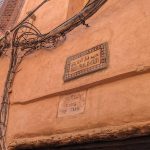
Marrakesh splits into two worlds: Guéliz, the French-era new town of hotels and cafés, and the medina — the old city inside red-earth ramparts, a UNESCO World Heritage Site since 1985. The medina is the star. Its lanes are narrow, winding, dead-ended, and lined with near-identical walls — even map apps lose your position, so assume you will get lost. Your real guides are the tiled street-name signs at the mouths of the lanes, and one rule: keep going straight until you hit a big street. Getting lost is the whole point here.

Jemaa el-Fnaa — the heart of the city transforms at dusk
Jemaa el-Fnaa, the great square at the center of the medina, is a “living square” whose cultural space is itself inscribed as UNESCO Intangible Cultural Heritage. By day it is little more than orange-juice carts. As the sun drops, food stalls, street performers and music circles multiply as if welling up from the ground, and by night it is a sea of smoke and noise. The best way to take it in: claim a rooftop café seat overlooking the square in the late afternoon, and watch the transformation from above with a mint tea in hand. Then walk down into the noise — you get the full heat of the city, safely.
Walking the souks — treat haggling as a game
Every lane running north from the square is souk. Lamps, ceramics, leather babouche slippers, tagine pots, spices — shops cluster by trade, goods stacked to the ceiling of the passageways. There are almost no price tags. Negotiation is the default, and the first quote is the tourist price. To build a sense of the going rate, don’t buy at the first shop — ask the opening price for the same item at two or three. Counter with a smile at around half, and if you can’t meet, say thank you and walk out. If the shopkeeper follows you, that was the real price. There is no need for it to turn sour — the shopkeepers enjoy the game too.

Stay in a riad — silence one step inside the noise
For lodging, we strongly recommend a riad — a traditional courtyard mansion inside the medina, converted to a guesthouse. The dust and clamor of the lane outside vanish the moment the door closes: a fountain courtyard, tilework, and stillness. That contrast — chaos outside, serenity within — is the whole philosophy of Moroccan architecture, and no hotel can reproduce it. One criterion matters when choosing: stay within a few minutes’ walk of Jemaa el-Fnaa or a city gate. Deeply buried riads are cheaper, but the walk home at night and the luggage haul become an ordeal.

Marrakesh as a base — where the city takes you
Marrakesh’s real value is what it puts within reach. First, the Sahara desert tours (3 days / 2 nights) — nearly all of them depart from this city (see our full guide). Second, a day trip to Essaouira, the Atlantic port town, 2.5–3 hours by bus (guide). Morocco’s national railway (ONCF) runs on to Casablanca and Fez, and by air Lisbon or Madrid is only one to two hours away — a two-continent trip pairing Morocco with Iberia is genuinely practical. The classic pattern is to come and go in waves: two nights in Marrakesh, two in the desert, then one more back in the city.

GetYourGuide
Compare tours and experiences from Marrakesh
Sahara desert tours, Essaouira day trips, medina food walks and more — most with free cancellation.
Compare experiences →Practical notes for Marrakesh
- Airport to the city — Menara Airport to the medina is about 15 minutes by car. Agree the fare before getting into a taxi (don’t count on the meter); ride-hailing apps or a riad transfer are the reliable options
- Cash — souks, food stalls and taxis run on dirhams in cash. Cards work at mid-range restaurants and riads. ATMs cluster in the new town and around the square
- Dress — modest cover is the safe choice. Even in spring the daytime sun is strong; bring a hat and sunglasses
- Entry note — many nationalities can visit Morocco visa-free for up to 90 days; check the rules for your passport before you fly. The police registration number written into your passport at entry is asked for at every check-in, so photograph that page (as of July 2026)
- Touts — the classic move is to “show you the way” and then demand a tip. Decline clearly if you don’t want help, and ask shopkeepers for directions instead
Where to go from here
- The country at a glance → Morocco Travel Guide
- Compare all our destinations → Destinations
- From this city to the dunes → Sahara desert tour guide
The history here
Why the places, the food and the artworks in this article are where they are.
The Almoravids found Marrakesh
It was built as the northern terminus for caravans that had crossed the Sahara. For more than nine centuries since, the medina has been not a preserved ruin but a working maze of trade and daily life; it became a World Heritage Site in 1985. The storytellers and food stalls of Jemaa el-Fnaa are protected as intangible heritage.
📍 If you go


