Field notesSeptember 2023 · a first-hand week traveling Manila and Bohol
Prices & rules last checkedJuly 2026
The Philippines is not just a beach country. More than a thousand conical hills running to the horizon at the Chocolate Hills, a lunch cruise up a jungle river, a school of sardines that fills your entire field of vision, and a Manila skyline evolving as fast as any in Southeast Asia — this itinerary takes nature and the metropolis in a single trip.
The short version — two days for Bohol, two for Manila
- Bohol is about 1.5 hours from Manila by domestic flight: the island’s main sights — the Chocolate Hills, the Loboc River — fit into a single land-tour day. Add a day for the sea and plan on at least two nights
- The land day runs “lunch cruise → zipline → Chocolate Hills”: a chartered car costs roughly 2,500–3,500 pesos for the day (as of July 2026). The viewpoint is best in late-afternoon light, when the hills throw their shadows
- The sea day is diving or snorkeling: a high chance of the sardine run and sea turtles is what sets Bohol’s waters apart
- Do not forget eTravel registration: everyone entering the Philippines must register free of charge within 72 hours before arrival (etravel.gov.ph). You will be asked to show the QR code at airport check-in
The Chocolate Hills — a thousand hills of geological wonder

Inland Bohol holds more than 1,000 nearly uniform conical hills, each a few dozen meters high — the Chocolate Hills, limestone eroded over immense stretches of time into a landscape with no real equal anywhere on earth. From the main viewpoint in Carmen (entry 100 pesos · 6:00–18:00 · as of July 2026), the hills spread out in a 360-degree panorama. We arrived just before 4 p.m., and the timing was exactly as planned — the lowering sun puts a shadow on every single hill. In September’s rainy season the hills are green; if you want the true “chocolate” color, aim for the late dry season (March–May).
The Loboc River — jungle cruise and zipline

On the Loboc River in the island’s south, the signature experience is the lunch cruise (buffet included, about 1,000 pesos, as of July 2026) aboard a roofed floating restaurant that is itself the boat. Palm jungle crowds over the emerald water, and the scenery changes every time you go back for another plate from the Filipino buffet. It is a tourist boat that genuinely feels like a jungle expedition — the river is narrow and the green presses close.

After the cruise, get an adrenaline hit on the zipline that crosses the gorge near Loboc. Sliding over the jungle valley on a single wire is a view of Bohol you will never get from a car window. One note on the island’s other famous resident: the tarsier, one of the world’s smallest primates, is nocturnal and extremely sensitive to stress. If you visit, choose the sanctuary (entry about 170 pesos) rather than caged displays, skip the flash, keep your voice down and observe quietly from a distance — that is the etiquette.
Bohol underwater — a tornado of sardines fills your mask

Bohol’s other headliner is the sea. The waters around Panglao Island, joined to Bohol by bridge, are a world-class diving and snorkeling area, and the highlight is the sardine run — tens of thousands of sardines forming a silver wall, then a tornado, endlessly reshaping right in front of you. The moment sunlight cut into the school and flashed off it is something we — novice divers at the time — have never forgotten. Intro dives and snorkel trips can be arranged at beachfront shops even a day ahead, but in high season booking in advance is the safer play.
Manila — Makati and BGC, two faces of a changing city

Bookend the trip with Manila. The base should be one of two districts: Makati or BGC (Bonifacio Global City). Makati is the established center — malls, restaurants and hotels packed beneath the financial district’s towers. BGC, by contrast, is “walkable Manila”: the wide sidewalks and greenery of a planned city, giant LED public art and sharp cafés — Southeast Asia’s urban evolution, felt underfoot. Push on to Intramuros, the Spanish-era walled city, and you can cover 400 years of history in half a day.

Practical notes for Manila and Bohol
- Entry — many nationalities can visit visa-free for short tourist stays (30 days for many passports — check the rules for yours). Proof of onward or return travel is required, and your passport must be valid for your stay plus six months (as of July 2026)
- eTravel — everyone must register free within 72 hours before arrival (etravel.gov.ph); save the QR code. Paid “agency” sites are scams — use the official one only
- Airport to the city — from NAIA to Makati/BGC, the ride-hailing app Grab means transparent pricing and peace of mind (30–60 minutes depending on traffic). Street taxis still bring meter and haggling trouble
- Manila ⇄ Bohol — about 1.5 hours by domestic flight (Bohol–Panglao International Airport). From Cebu there is also a fast ferry, about 2 hours
- Safety — central Makati and BGC stay lively after dark, but avoid walking alone late at night and do not keep your phone out in crowds. Carry valuables in a bag worn in front
- Season — the dry season is December–May. Our September fell in the rainy season, but the squalls were short and most mornings were clear — and on price and crowds, the rainy months win decisively
Where to go from here
- The country at a glance → Philippines Travel Guide
- A paradise resort on the Andaman Sea → Phuket travel guide
- City walks in fast-growing Southeast Asia → Ho Chi Minh City travel guide
- Choose your next trip by scenery → Scenic travel destinations
The history here
Why the places, the food and the artworks in this article are where they are.
Legazpi founds Manila, and 333 years of Spanish rule begin
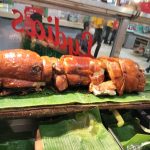
The walled city of Intramuros became the colonial capital, and galleons ran between here and Mexico. Spanish names on the Filipino table date from this period — lechon is lechón, suckling pig.
📍 If you go


