
In the 15th and 16th centuries, Portugal — a small country at the western limit of Europe — was the first to push out into the world’s oceans. The sea route to India, the “discovery” of Brazil, the first circumnavigation — and the firearms that reached Tanegashima and Xavier’s landing in Japan. The stage of this Age of Discovery (Era dos Descobrimentos), which quite literally rewrote history as far away as Japan’s Warring States period, is the Belém district in western Lisbon. This article walks Belém’s three World Heritage sites and monuments with an eye for the history: why Portugal, of all nations, went first — and the 500-year thread that runs from these docks to Japan. Not a checklist of sights, but an attempt to put into words what actually happened on this spot.
Why Portugal went first
How did Portugal, no great power, fire the starting gun on global expansion? The reasons stack up. Prince Henry the Navigator drove navigation, cartography and shipbuilding as an organized program, refining the ocean-going caravel and celestial navigation. And precisely because the Mediterranean trade was locked up by larger powers, Portugal staked everything on a new route south down the Atlantic toward Asia — the strategy of a have-not nation that ended up redrawing the world map. The mouth of the Tagus at Lisbon was the departure point and the homecoming point of every one of those voyages.
Reading the history in Belém — the three stages
Jerónimos Monastery — wealth and prayer in stone
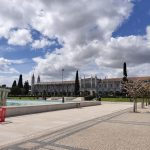
A World Heritage Site regarded as the masterpiece of the Manueline style. Built on the colossal wealth of the spice trade, its stone is carved with motifs of the sea — ropes, shells, plants. Here lie Vasco da Gama, who opened the route to India, and the national poet Camões (author of the epic Os Lusíadas): this is the pantheon of the Age of Discovery. Admission to the paid areas such as the cloister is €18 for adults (the church is free); open 9:30-17:30 (last entry 17:00; the church from 10:30), closed Mondays (as of July 2026).
GetYourGuide
Find Belém and Jerónimos Monastery tickets and tours
Beat the inevitable queues at the World Heritage sites. Compare entry tickets and guided tours for the Belém district in one place.
Browse tickets →Monument to the Discoveries — the navigators’ procession

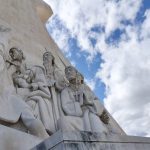
A colossal stone prow jutting toward the Tagus. Prince Henry the Navigator leads; behind him come Vasco da Gama, Magellan, Cabral who reached Brazil — and Francis Xavier. Stand here and you can follow where the procession was headed: at the far end of these voyages lay Japan, and the history of the other side of the world. The marble pavement at its feet carries a world map with the routes and dates, so you can take in at a glance who reached where, and when. The viewing deck and exhibition inside cost €10 for adults; open 10:00-19:00 March-September / 10:00-18:00 October-February (closed Jan 1, May 1, Dec 24, 25 and 31; as of July 2026). It opens daily March-September; October-February it closes on Mondays, like Jerónimos and Belém Tower — worth knowing when you plan the day.
Belém Tower — the gate of departure

Built around 1515 as a defensive fortress and gate of departure. From here, tens of thousands of sailors set out for India, Brazil — and Japan. Behind the graceful Manueline ornament are carved the prayers of men leaving on voyages they might never return from. The tower reopened at the end of May 2026 after restoration and now runs on timed entry slots with a daily visitor cap. Admission €15 for adults; open Tuesday-Sunday 9:30-17:30, closed Mondays. Booking online in advance is the reliable way in (as of July 2026).
The 500-year thread to Japan — Tanegashima, Nanban and castella
The Age of Discovery is not a story of distant lands sealed in a museum case. In 1543, Portuguese castaways landing on the island of Tanegashima introduced firearms to Japan and transformed how the Warring States were fought. In 1549 Xavier stepped ashore at Kagoshima, bringing Christianity. The Nanban trade that followed left words and culture behind in Japan — tempura, castella sponge cake, konpeitō sugar candy, bread (“pan”), buttons. Look up at the stone prow in Belém and the fact snaps into focus: Japan lay at the far end of these voyages — and the history suddenly becomes personal, whichever side of the world you started from.
Tips for the walk
- Avoid Mondays — Jerónimos Monastery and Belém Tower are closed (the Monument to the Discoveries stays open March-September; October-February it closes on Mondays too)
- Do Jerónimos in the morning (right at the 9:30 opening, before the tour groups — advance booking recommended)
- Monastery → Monument to the Discoveries → Belém Tower is a straight line on foot
- Finish at Pastéis de Belém for the original egg tart
- Reach Belém from the center on tram 15E (see also the tram 28 guide)
- For choosing where to book skip-the-line entry and guided tours, see Portugal tours compared
The order to walk Belem — how to string the three stages together
The three in Belem stand within walking distance of each other, but fixing the order cuts the waiting. It is about 6 km west of the centre, some 25 minutes on tram 15E, so plan on giving it a whole half day.
- First thing in the morning, the Jeronimos Monastery: architecture in which the wealth of the age of discovery turned to stone, and the cloister inside is the body of it. ⚠Closed Mondays, so putting Belem on a Monday shuts two of the three
- Then the Monument to the Discoveries: a short walk river-side from the monastery. The composition of navigators lined up on a prow means something because it stands facing the Tagus
- Close with Belem Tower: it juts into the river as the gate of departure. ⚠This one is closed Mondays too
- If you land on a Monday: the Monument to the Discoveries is outdoors, so you can still see it. Move the monastery and the tower to another day and switch that day to the Alfama side, up on the hill — that is the standard move
The order of the sights is in Portugal: 15 Top Attractions, and how to build a day in the Lisbon 3-day itinerary.
Where to go from here
- Fold Belém into day one → Lisbon 3-day itinerary
- History written on the walls → The complete azulejos guide
- The sensibility these voyages left behind → Living with saudade
- The country at a glance → Portugal Travel Guide
The history here
Why the places, the food and the artworks in this article are where they are.
Prince Henry sails for Ceuta
This is the expedition usually taken as the opening of the Age of Discovery, and the fleet was fitted out at Porto. The citizens are said to have given all their meat to the ships and eaten the offal themselves. That is why the people of Porto are still called tripeiros, tripe-eaters, and why tripe stew is the city’s dish.
📍 If you go
Vasco da Gama opens the sea route to India
He sailed from the beach at Belém in 1497 and reached Calicut in May of the following year. The spice wealth paid for Jerónimos Monastery, where his tomb now lies. Belém Tower was finished about twenty years later to guard the point of departure.
📍 If you go
Portuguese sailors are wrecked on Tanegashima, and firearms reach Japan
The eastern end of the Age of Discovery route was Japan. Guns arrived first, then Christianity and Portuguese sweets, all by the same sea route. Standing at the Monument to the Discoveries in Belém, you are standing at the other end of it.
📍 If you go
The monastery’s pastry goes on sale in a shop
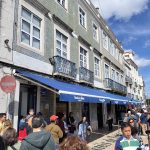
When the monasteries were dissolved in 1834, a monk left the custard tart recipe with the sugar refinery next door. The shop that opened in 1837 is Pastéis de Belém, still beside the monastery. The monastery is World Heritage; the recipe is in a safe.
📍 If you go


