Field notesFebruary 2026 · a week of first-hand eating
Prices & rules last checkedJuly 2026
Honolulu’s food is not “American food.” It is what happens when the food culture of Native Hawaiians spends more than a century absorbing what Japanese, Portuguese, Chinese and Filipino immigrants brought with them — a melting pot that exists nowhere else on Earth. Here are the winning moves for morning, noon, snack time and night.
The short version — engineering a full day of eating in Honolulu
- Morning: acai bowl or loco moco. The popular spots queue from early — right at opening is smoothest
- Noon: ride the plate-lunch culture. Garlic shrimp, poke, BBQ — a box of mains plus two scoops of rice is the best-value eating in Hawaii
- Snack: malasadas, no contest. The Portuguese-immigrant doughnut must be ordered fresh from the fryer
- Prices are high — but the street tier wins. A restaurant dinner realistically runs $50-plus a head with a 15–20% tip on top. Build your days around food trucks and plate lunch and the total changes completely
Morning — Waikiki starts with an acai bowl

Waikiki mornings begin with the acai bowl. An acai smoothie layered with granola and fruit, it is the meeting point of health-café culture and a tropical-fruit island — Hawaii’s own breakfast. Figure around $15 at the health-bar cafés of the hotel district. If you want something heartier, there is the loco moco — hamburger patty, fried egg and rice under gravy. Born in Hilo in 1949, it is the flagship of local cooking, and a plate off the flat-top of an old diner tastes like everyday Hawaii.
Snack — at Leonard’s, wait for the malasadas to come out hot


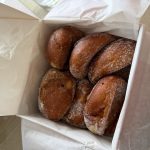
Hawaii’s signature treat, the malasada, is a fried doughnut brought over in the 19th century by Portuguese immigrants who came to work the sugarcane plantations. The mother church is Leonard’s Bakery, founded in 1952 — every batch is fried to order, so the box arrives hot: crisp outside, cloud-soft inside. Beyond plain sugar there are filled versions — custard, haupia (coconut) and more. It sits a little under 10 minutes by car from Waikiki, and the retro sign is a photo stop in its own right. Don’t be scared off by the line; it moves fast.
Noon — plate lunch and garlic shrimp

Hawaii’s midday hero is the plate lunch — a boxed set of a main with rice and macaroni salad, descended from plantation workers’ lunch pails. The king of the genre is garlic shrimp. The North Shore’s food-truck clusters are the heartland (perfect as the lunch stop on the Oahu loop drive), but there are specialists around Waikiki too, and $15–20 gets you properly full. The other staple is poke — cubed tuna tossed in sauce. Buy it by weight at a supermarket deli counter and eat it on the beach; that is the local way.
Night — from local pizzerias to steakhouses

At night, the width of your options is the width of your budget. Our own favorite was not the tourist-facing fine dining but the pizzerias and diners the locals love — a pizza that is essentially garlic shrimp on dough is Hawaii’s mix-everything food culture in full cry. For a special occasion, Waikiki’s steakhouses run $70–100 a head plus tip; for an easy night there are local burgers and food courts. Whichever table you choose, remember the 15–20% tip when the check comes.
Practical notes for eating your way through Honolulu
- Tipping — 15–20% at table-service restaurants. Counter-order cafés and food trucks are discretionary (the card terminal’s tip screen does offer 0%)
- Budget guide — café breakfast around $15 / plate lunch $15–20 / dinner $50–100 plus tip. Built around food trucks, a day in the $50s is possible
- Beating the lines — hit popular spots right at opening or in the 2 p.m. lull. The malasada line looks long but turns over fast
- Getting around — walk within Waikiki; for spots farther out like Leonard’s, take TheBus (the public bus) or a rideshare
- To-go culture — portions are big, so taking food to go is completely normal. A hotel-room fridge makes the whole enterprise run better
Where to go from here
- The full trip design → Hawaii Two-Island Itinerary
- The country at a glance → USA Travel Guide
- Pick your next trip by food → Food Travel Destinations
- Compare all our destinations → Destinations
The history here
Why the places, the food and the artworks in this article are where they are.
Portuguese migrants arrive in Hawaii from Madeira
They came all the way from an Atlantic island as contract laborers for the sugar plantations, bringing fried malasadas and a small four-stringed instrument that became the ukulele. A hot malasada in Honolulu is a nineteenth-century migrant’s food.
📍 If you go


